MyWestern
 Academic Calendar
 Bookstore
 University Catalog
 Athletic & Recreational Venues
 MyWestern
 Academic Help
 Library
 Health & Wellness
 Campus Map
 Events

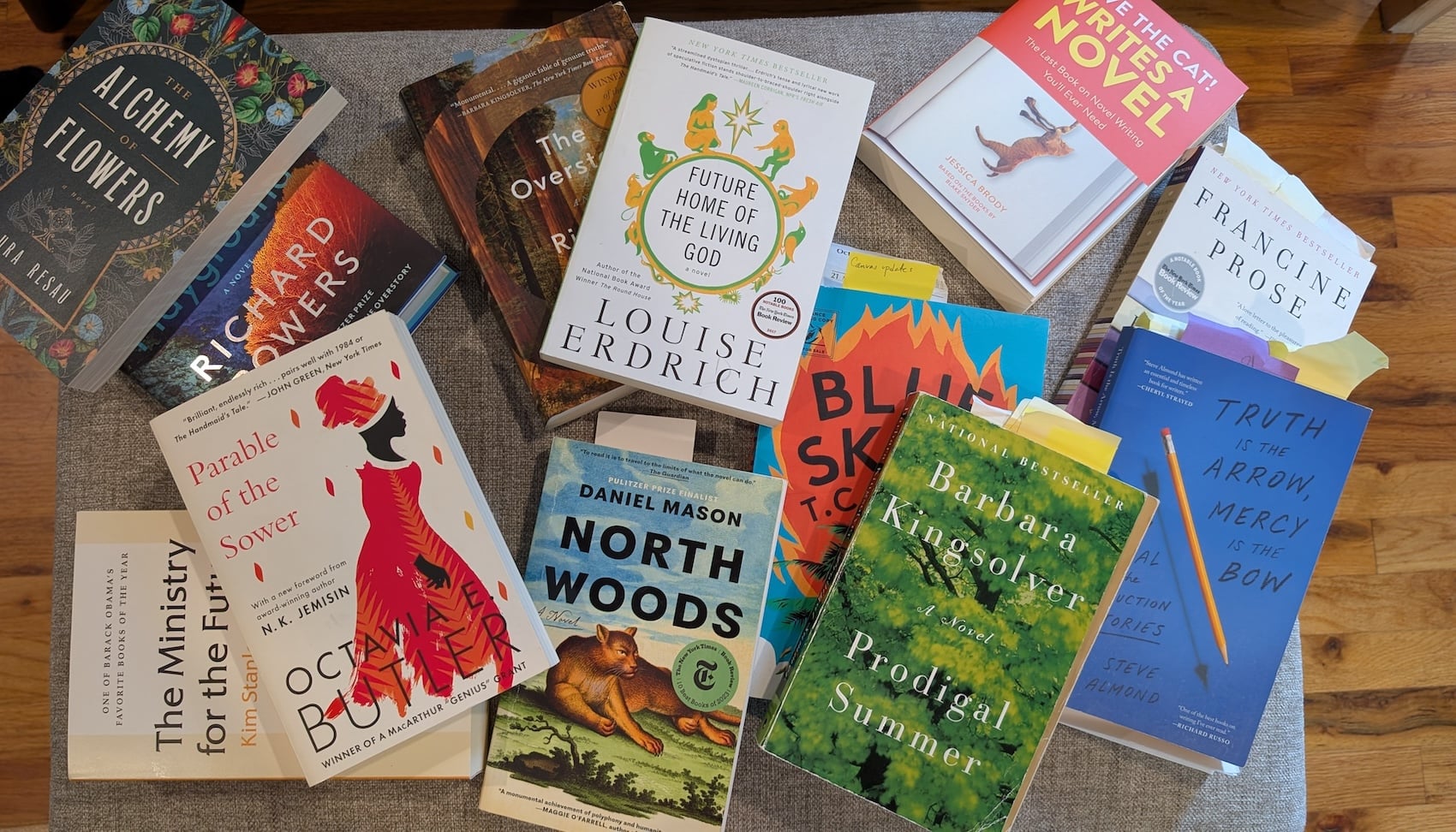
The Wild and Urgent Power of Words: Capturing Climate Chaos in Fiction with Nature Writing
Laura Pritchett explores how fiction, nature writing, and bold creative experimentation can help us imagine new ways of responding to climate change.
I was having the worst summer of my life, hands down, when I went through my most manic writing phase. I was not alone in this bad-summer experience—this was 2020 and we were all in the early, scariest moments of the pandemic. On top of that, what became Colorado’s largest wildfire was burning right outside. My home sits at the base of a mountain, so evacuees were streaming by with stock trailers loaded with goats or horses or belongings, and non-human evacuees were coming in too, marmots and mountain lions and bears all dislocated and disoriented.
I did what I always do when sad and scared: I started writing. Obsessively. My wrists ached and my back hurt, but I could not stop, and I did not have any usual life interruption to force a stop. Like so many, I hardly traveled that year, even when I wanted to desperately escape the hazardous air quality. States were shutting down roads and restaurants, no one knew if traveling would kill you, and I wasn’t sure where to go anyway. The next year, I also stayed put, not straying far from my couch for another reason, which was a terrible case of Covid. I couldn’t have moved even if I’d wanted to.
So I wrote and wrote. Read and read. Stared out my window. Like so many, I became a birder, a cloudgazer, a noticer like never before, nature providing solace and entertainment. And thus reading, writing, and the outdoors became the Holy Trinity of my life. It was two years of complete obsession with three things.
Literary fiction about the planet is everywhere
During this time, I came across Amitov Ghosh’s wonderful book The Great Derangement. “That climate change casts a much smaller shadow within the landscape of literary fiction than it does even in the public arena is not hard to establish,” he writes. I love-love-love his work, but disagreed with that sentiment—climate and environmental issues have been a part of nearly all my novels, and I live in a weird bubble of such works, since my day job is directing an MFA in Nature Writing. Sometimes I feel like all I do is track climate change fiction! In my small world, literary fiction about the planet is everywhere.
I could not agree more, though, with his next argument. After he asks why there’s so little fiction about climate change, he writes, “Are the currents of global warming too wild to be navigated in the accustomed barques of narration?” and goes on to argue that if fiction can’t tell the stories of climate change, it will have failed, and this failure could be “counted as an aspect of the broader imaginative and cultural failure that lies at the heart of climate chaos.”
A-men. I’ve long been arguing that we need writing and climate action to evolve—and fast! We need more and more and more stories to front-and-center the realities borne of climate chaos; we need bigger, braver, crazier imaginations in order to find real solutions. I was teaching one of my favorite MFA classes online during this time (teaching does not stop because of covid or wildfires, I noticed with some exhaustion)—a class focused on innovative and experimental form in nature writing, and we cover such things as hermit crab writing, epistolary form, flash, ekphrastic, and multi-media work. In the other class I teach, we cover good ‘ol standard narration, which is lovely too. Both approaches—innovative and ‘regular’—can be wildly imaginative, I told my grad students, and they might actually inspire some real change.
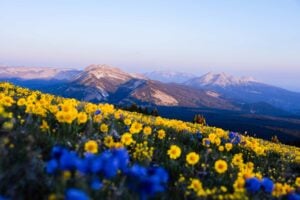
From all this mashup of wildfires, COVID, nature, teaching, reading, writing, and despair that fueled mania, two very different books got written: One highly experimental and literary, a polyphonic novel about the wildfire coming into my community; the other an upmarket novel about a woman escaping a life that needs escaping and becoming a bit of a naturalist along the way. Go figure! Even I could see my psychology at play: one novel about staying put during a crisis, since that’s the reality of what I was going through; the other an escape novel, since that’s what I wanted.
After all that trauma, some very good luck came my way: Two contracts. The literary book was published by a small but brave press (Torrey House), and the upmarket sold to one of the Big Five (Ballantine). Despite the very big differences in process and publication, the two books share one thing in common: the goal of centering environmental issues in (hopefully) engaging fiction. I don’t know if I succeeded, if Ghosh would approve, but I gave both books my whole self, my grief and my hope, my wrists and my back, with the goal of trying to tell brave imaginative lies about our realities.
Pushing the edge through nature writing
I’m forever repeating my favorite Annie Dillard lines: “The writer knows his field—what has been done, what could be done, the limits—the way a tennis player knows the court,” she writes. “And like that expert, he, too, plays the edges. That is where the exhilaration is. He hits up the line. In writing, he can push the edges. Now, courageously and carefully, can he enlarge it, can he nudge the bounds? And enclose what wild power?”
Exactly. That’s what I believe in: The wild power of words for wild things.
Ghosh and Dillard are saying the same thing, I believe. We can push the edges, nudge the boundaries, either in form or in content. Climate chaos is so huge—and thus we need many ways in. Through brave experiment of form, or through characters brave-of-heart, perhaps we can find some solutions, or at least imagine new ways to live on—and love on—Planet Earth.
Laura Pritchett’s Three Keys was recently released by Ballantine, and her novel Playing with (Wild)Fire was published recently by Torrey House Press. Known for championing the complex and contemporary West and giving voice to the working class, her books have garnered the PEN USA Award, the Milkweed National Fiction Prize, and others. She directs the MFA in Nature Writing at Western Colorado University. www.laurapritchett.com
This essay originally appeared in She Writes.
Meet the Expert
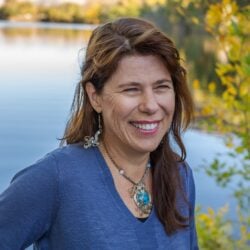
Laura Pritchett
Nature Writing Concentration Director
Laura Pritchett, PhD, is the author of seven novels. Her first, Hell’s Bottom, Colorado, won the PEN USA Award for Fiction and the Milkweed National…
MA or MFA in Creative Writing
Interested in exploring the relationship between writing, place, climate, and the natural world? Western’s low-residency Graduate Program in Creative Writing offers MA and MFA degrees with concentrations in Nature Writing, Genre Fiction, Poetry, EcoPoetry, Publishing, and Screenwriting.
Related Stories