MyWestern
 Academic Calendar
 Bookstore
 University Catalog
 Athletic & Recreational Venues
 MyWestern
 Academic Help
 Library
 Health & Wellness
 Campus Map
 Events

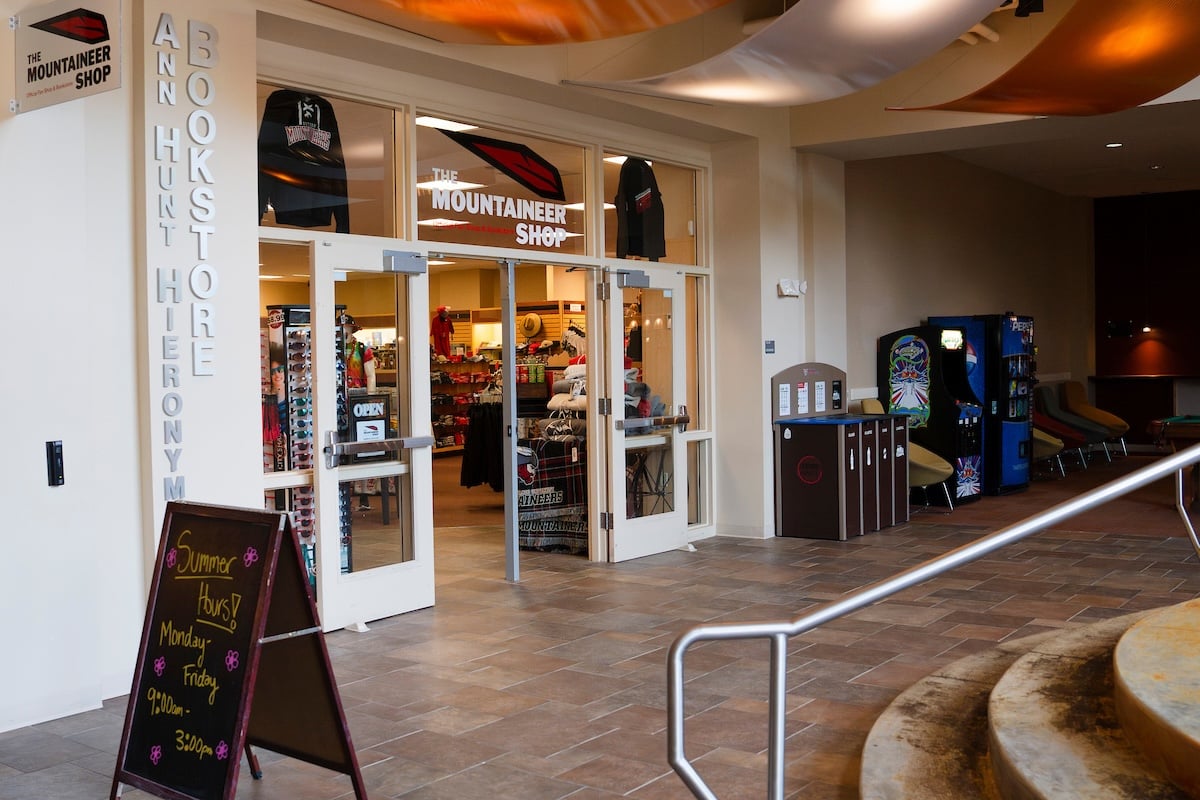
Before Charlie Dillman spent the summer working at The Mountaineer Shop, he assumed running a campus bookstore would be relatively simple. Then he started handling inventory, sales, database entry, and building displays.
“It was not as simple as I had imagined,” he said.
Dillman, a third-year computer science major at Western Colorado University, was part of Careers for Mountaineers, a new program that placed student interns inside four University departments – Mountaineer Marketplace, The Mountaineer Shop, Campus Life, and the Gunnison Orchestral and Vocal Academy (GOVA) – where they could learn new skills and see firsthand how an organization operates.
“Because Western is small, students get to see how the business of a university runs. So this was designed to be far more than a summer job,” said Katheryne Hinze, Western’s Director of the Center for Career Success. “It was going to be a true internship.”
Supervisors submitted goals, timelines, and projects for the students to complete, then met with their interns regularly throughout the summer to offer advice and feedback. Hinze also held regular career development lunches for students to work on their resumes, elevator pitches, or LinkedIn profiles.
The opportunity proved to be in high demand, with more than a dozen students applying for four positions and 10 departments offering to host them.
Not only did Dillman put his technical skills to work at the Mountaineer Shop, but the experience was designed to help him refine soft skills like communication, teamwork, and professionalism that will make him more effective in the workforce.
“Building confidence in a professional context is also huge,” he said.
According to a study from the National Association of Colleges and Employers released this spring, more than 40% of employers thought new college graduates had hard skills that aligned with their needs. However, the report said those new hires often came up short in areas like communication, professionalism, and critical thinking.
In talking about their internship experience, those are exactly the skills the students reported seeing the biggest improvements in.
At Mountaineer Marketplace, accounting and psychology student Adam Collins reviewed compliance standards and studied the practices of four other university food pantries before reorganizing the operations manual and developing training materials as the Marketplace prepared to double its staff.
Biology student Ella Lopez helped organize content, design flyers and digital concert programs, and supported operations for the Gunnison Orchestral and Vocal Academy. The tight deadlines of stage productions taught her to manage several projects at once and to pay attention to detail.
“Everything has to be there on time, and when they ask you to do it, you have to make it happen,” Lopez said. “You can’t miss any details when it comes to information that you’re putting out to the public.”
At Campus Life, Accounting student Ava Montgomery worked with the Inter Club Council to develop a policy handbook for new clubs, create an event-planning toolkit, and help organize the campus Club Fair. “I wanted to make sure that people can turn their passion into something that can benefit campus life,” she said.
In Career Services, finance major and data science minor Nate Lumaye used Excel to manage results from Western’s First Destination Survey, which tracks the first steps of recent graduates. During his internship, the response rate nearly doubled to almost 60%. He also built a database showing students where different majors might lead and started working on a Google Data Analytics certificate after learning about it through the internship.
“I think it’s very important to show a student the versatility of a degree,” Lumaye said.
At the same time, Lumaye’s internship experience demonstrates his versatility to employers. And employers recognize the value of that experience. Research from the Strada Education Foundation found that 73% of graduates who completed a paid internship landed a job after college that required a degree, compared with 44% of college graduates who did not.
Lumaye’s internship paid him $3,200 for eight weeks of work, made possible by support from Ty Petway, a Western alumnus who sees the importance of providing students with the career preparation and direction they need and whose support provides much of the funding for Western’s Career Services.
Bill Paddock, a member of the Western Colorado University Foundation’s board of directors, offered to match any donations to the program, funding two of the internships himself, while more than 20 other donors pitched in to make the program possible.
“Clearly, people can see the value in what the program is doing,” Hinze said.
Demand suggests there is room to expand, and Hinze plans to continue and grow the program as funding becomes available. Already, Mountaineer Athletics has started to adapt its student employment model in response to the program’s success, including structured projects and mentorship.
“I can definitely see this growing across campus,” Hinze said. “I feel like we have a good model.”
Related Stories