MyWestern
 Academic Calendar
 Bookstore
 University Catalog
 Athletic & Recreational Venues
 MyWestern
 Academic Help
 Library
 Health & Wellness
 Campus Map
 Events

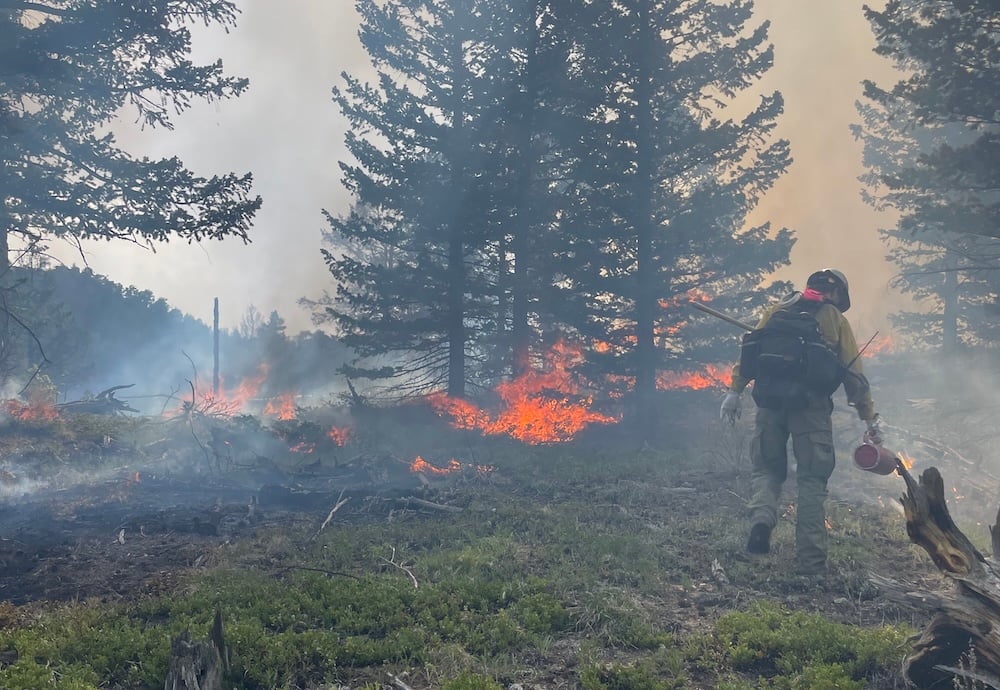
When Dalton Robberson finally got to the point of choosing a career path, he didn’t anticipate it would lead him into the family business. “My dad and both of my brothers are structure firefighters on [Colorado’s] Front Range,” he said. “I was exposed to firefighting my whole life; I never thought it would be the field I would want to go into.”
Still, he found himself studying environmental science in college and taking fire science classes he really liked. Then, in the summer of 2020, the Pine Gulch Fire started 20 miles north of campus. Smoke filled the air, making it hard to breathe or see more than a few feet. Fire, it seemed, was in his future, whether he liked it or not.
After college, he took a job at the Cal-Wood Education Center in Boulder County, which had also been severely impacted by a 2020 wildfire. There, he taught visiting students about the important role wildfire plays in different ecosystems, as well as how communities can mitigate wildfire risks and recover after one passes through. “It was really cool teaching kids about wildfire,” he said.
That experience led Robberson to the research being produced by Dr. Jonathan Coop’s lab at Western Colorado University, where he enrolled in the dual Master of Environmental Management (MEM) and M.S. in Ecology program at the Clark Family School of Environment and Sustainability.
“Dalton’s M.S. research uses satellite fire detection … methods that are new and have not been widely used. There are many ways that they could be applied to gain insight into changing wildfire regimes in different parts of the world,” Dr. Coop said. “Dalton is also interested in gaining experience in fire incident management outside of the U.S. For that reason, Fulbright was a natural fit as an opportunity to bring his science to Australia and learn about how things burn Down Under.”
The Fulbright Program is one of the world’s most prestigious international academic exchange programs, and the Australian-American Fulbright Commission awards just a handful of postgraduate research scholarships to Americans each year.
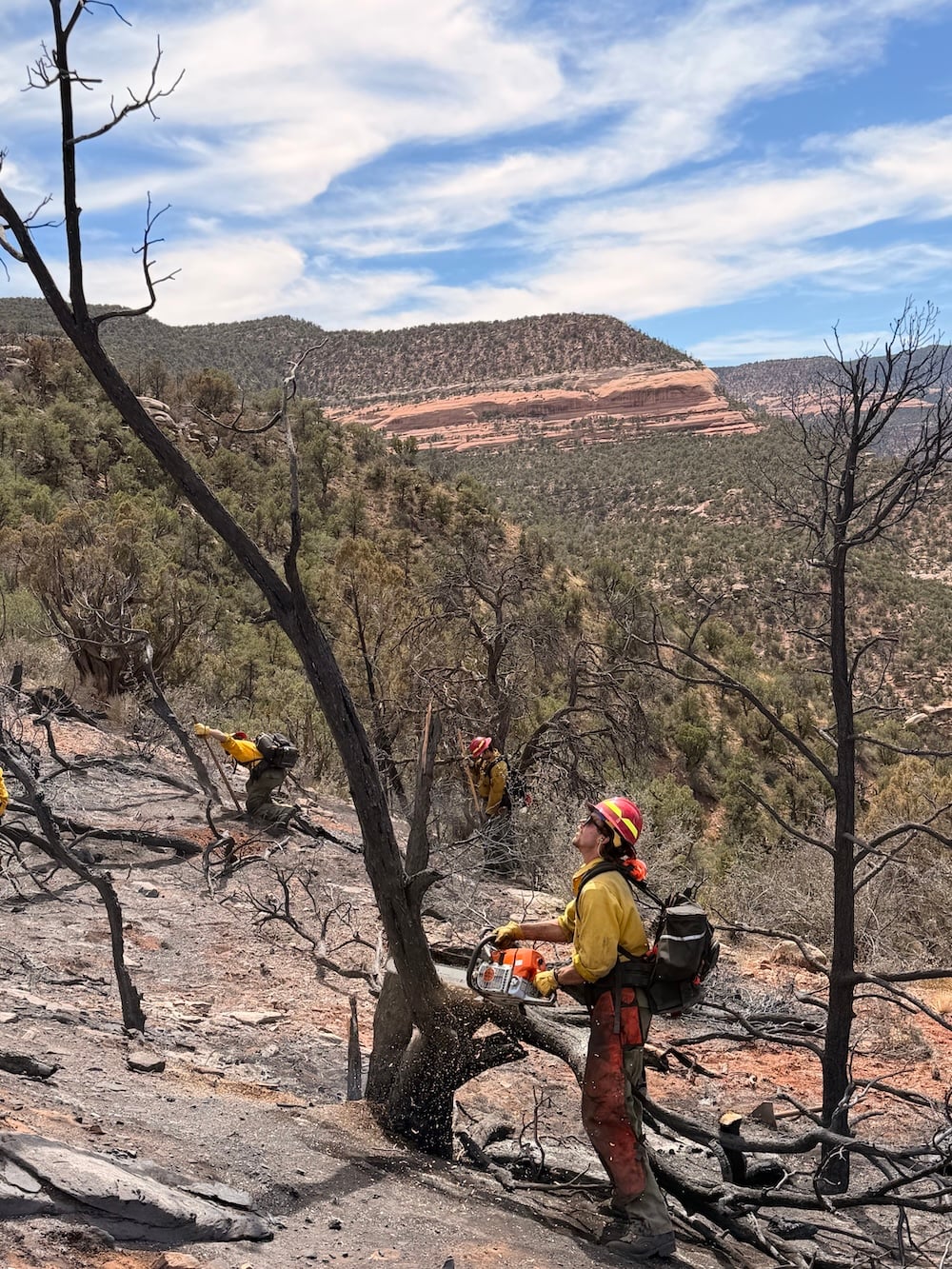
Still, Robberson applied and was selected to study as a Fulbright Scholar at the University of Melbourne in Australia, where he’ll spend the next eight months conducting wildfire research and completing some of his final MEM coursework online.
He’ll be arriving on Australia’s southeastern coast just as the wildfire season starts to pick up. And while the landscapes Robberson sees in Australia will look very different from the beetle-killed spruce and pine forests he studied in Colorado, he’ll be researching a lot of the same questions.
For his Master’s thesis at Western, Robberson studied how beetle kill influences wildfire intensity using a fire’s radiative power, or the rate at which it releases energy as it burns. In Australia, he’ll be working with the same metric in eucalyptus forests and coastal brush ecosystems that are also prone to intense fires.
“The goal is to identify the drivers behind intense wildfire activity and the ecosystems and communities they could impact,” he said.
But Robberson is also interested in what happens with his research when it’s done. At Western, while he was studying the science of wildfire, he worked with a Forest Service hand crew in Gunnison and, this season, as a wildland firefighter for Telluride, to gain valuable field experience.
In Australia, Robberson plans to continue that work by volunteering with a local wildland firefighting crew, hoping to pair his research with what he learns about how his Australian counterparts manage and fight their wildfires.
“There seems to be a pretty large gap between the fire science and actual on-the-ground management implications of the fire science, and I’d like to figure out how to collaborate with fire managers and academics to bridge some of those gaps,” he said. “If my project is beneficial for researchers and fire managers in Australia, and is something that I can bring back to the Gunnison Community, my project will have been a success.”
Want to be a part of the story?
At the Clark Family School of Environment & Sustainability, students dive into immersive, real-world experiences that spark bold ideas and lasting change. Discover our programs and start shaping a better tomorrow.
Related Stories