MyWestern
 Academic Calendar
 Bookstore
 University Catalog
 Athletic & Recreational Venues
 MyWestern
 Academic Help
 Library
 Health & Wellness
 Campus Map
 Events

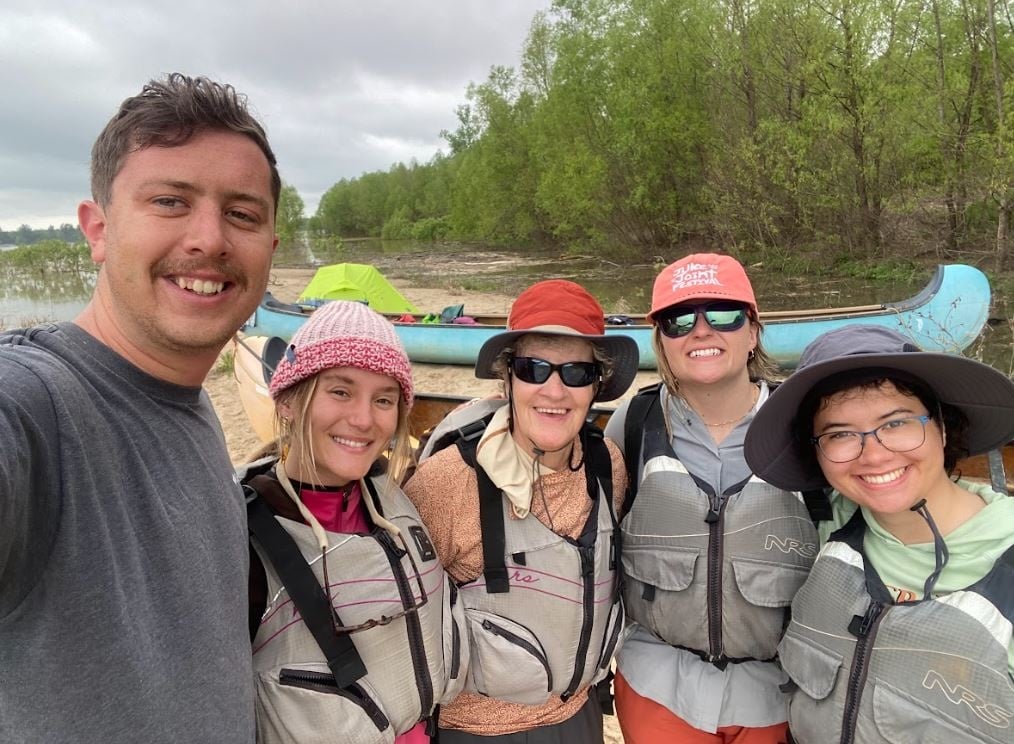
It took Katie Jackson some distance and a fresh perspective to really see the South she’d grown up in and loved.
The Alabama native had spent a lifetime traveling through the region and had been through the Mississippi Delta without ever really getting to know it. Her feelings about home were complicated, a mixture of pride and shame that came with knowing something about its history.
But it wasn’t until Jackson returned last spring with a group of Western Colorado University graduate students that she began to see the place in a way that’s only possible when you see home through someone else’s eyes.
“I have been lucky enough to visit the Mississippi Delta several times, but I never stayed long enough to truly grasp and appreciate its unique environment and cultures,” she said. “I’ve also crossed the Mississippi River countless times but never actually dipped so much as a toe in it, much less spent real time on its waters.”
In April, that changed when Jackson and 10 of her classmates traveled to the Mississippi Delta as part of Headwaters 398, a nearly two-week experiential course led by Western professors Micah Russell and Pat! Magee.
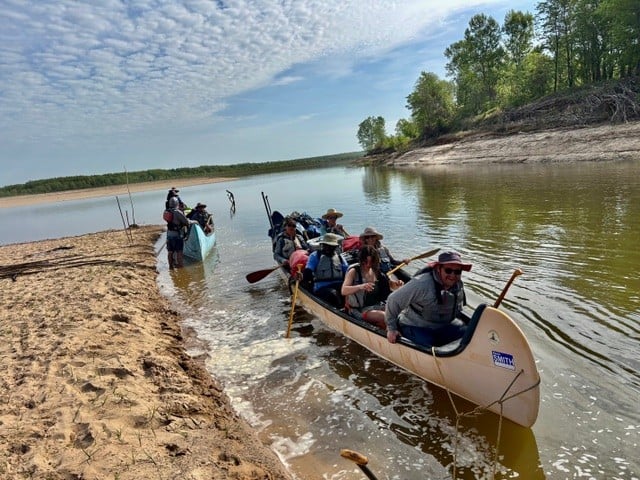
The purpose of the trip was twofold: to put them in canoes on the Mississippi River for several days to explore the ecology of the country’s biggest river, and then to take them behind its levees to experience the communities, cultures, and histories that have grown up under its influence.
“Our students have the benefit of immersing themselves in the natural history and ecology of the wild Mississippi River,” Dr. Russell said. “Then they come off the river, and they immerse themselves in the human landscape of the Delta.”
Into the River
For Western students accustomed to studying the relatively small, headwater creeks and rivers of the Upper Gunnison Basin, the Lower Mississippi offered a radically different sense of scale.
They followed legendary naturalist and river guide John Ruskey of the Quapaw Canoe Company for several days, paddling through floodplain channels and bottomland hardwood forests in full bloom, before spending their nights camping on one of the Mississippi’s wild islands.
On a shifting sandbar known as Scrubgrass Bend, Creative Writing graduate student Izzy Forrest slowed down enough to notice things that stayed with her.
“We began as kids out there. Playing in mud, riding logs down a flooded path, screaming as otters jumped from the muddy shore into the cool water,” she said. “We let ourselves become rivered during those days canoeing. We stuck feathers in our straw hats, we sang and danced around the fire, we found turtles and pointed out each passing bird.”
Just as Dr. Russell had hoped, the journey gave his students a chance to experience the Mississippi as a cohesive living system before trying to understand how the river, and the effort to control it, had changed the land and life behind the levees.
Behind the Levees
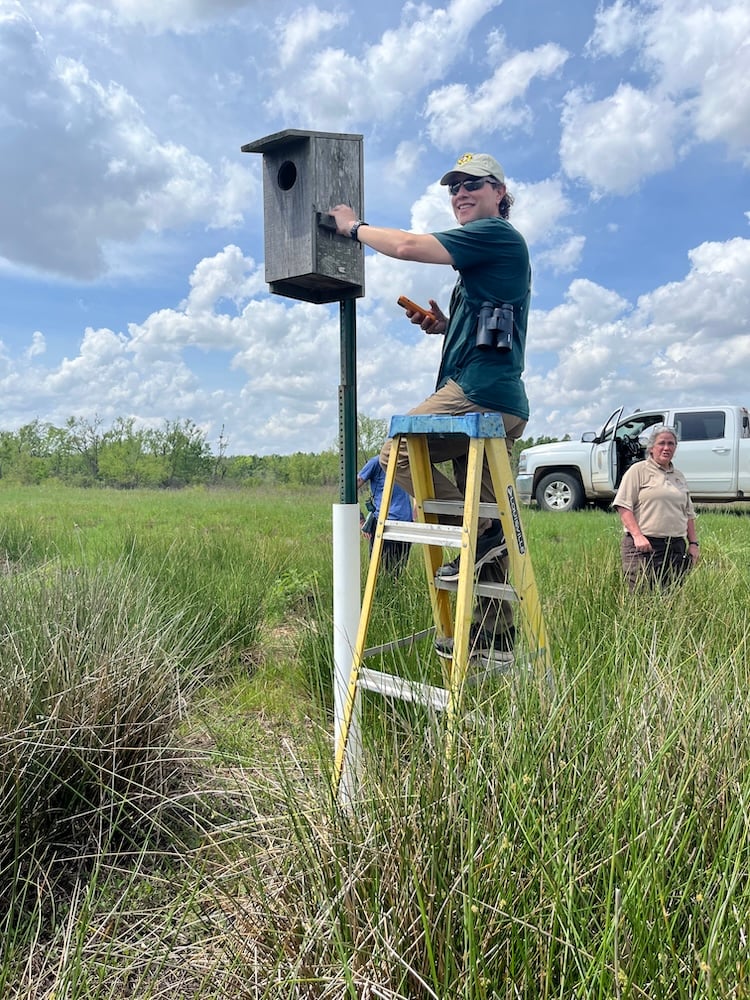
Back on land, the contrast was difficult to miss. The forests and river channels they’d spent days paddling through gave way to a landscape that had been drained, cleared, and transformed by agriculture. And the story of that transformation was inseparable from the story of the people who lived and worked the land there.
To understand the Delta, Russell said, students had to understand how slavery and sharecropping shaped its agricultural economy; how Jim Crow and the Civil Rights Movement shaped its communities; and how those histories continue to influence questions of poverty, race, and environmental justice today.
For Jackson, the experience was eye-opening.
“The story of the Delta region is richer and more complicated than I ever imagined,” she said.
They started by visiting an archaeological site to learn about the Indigenous people who’d lived in the region. They went to an African American museum in the small town of Mound Bayou, where formerly enslaved people built a self-governing Black community with its own businesses, schools, and a hospital, and where their descendants are now working to preserve that history.
“When they go inside the levees, they really examine what it’s like to live in that confined floodplain,” Dr. Russell said. “So it presents a real counterpoint between the abundance of the river and then the legacy of the conversion of the floodplain to other uses. And it also brings you right into a reckoning with civil rights history, too.”
But hardship is only part of the Delta’s history. Its people also created a culture whose influence traveled far beyond the levees.
And in Clarksdale, that history has a soundtrack.
The Mississippi Delta is where the Blues were born, and then set off to the north during the Great Migration, forever shaping the American sound, from rock ’n’ roll to country music. And that’s where the students saw the Blues come to life inside Ground Zero, a crowded Clarksdale juke joint that “smelled like smoke, booze, and barbeque sauce,” Forrest said.
She went on, “I got lost in the music that night … In that Juke Joint, we were all a community. We all were dancing on the same floor. We all knew we were human, and we all knew that music was something that could shake and move us. That night, I got to see for myself the power of music and community in the south.”
For Jackson, the food, music, and sense of community they encountered were part of a big picture she was just starting to see. The Delta she came home to was neither the place romanticized by outsiders nor one that could be reduced to the difficult chapters of its past.
“Spending time with its residents and in its diverse landscapes and communities,” she said, “gave me a much deeper appreciation of the region’s extraordinary natural and cultural treasures.”
What Comes Home
That was the juxtaposition Dr. Russell hoped his students would see.
After spending much of his young life in Oregon, he first traveled to the South as a graduate student, and it changed his life. “I needed something different,” he said.
Now, he’s able to give his students a taste of that experience and the change it can bring about.
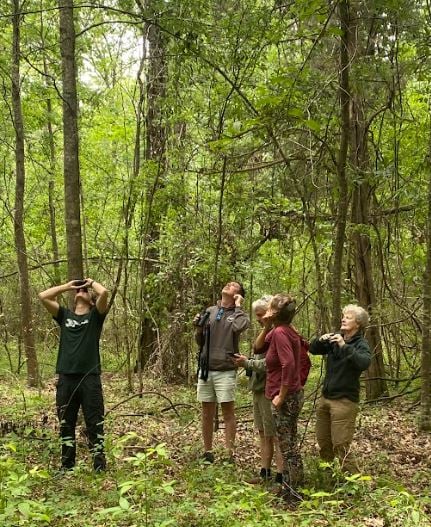
During their trip to the Delta, they met people preserving wildlife habitat, recovering histories, keeping cultural traditions, and working to improve communities that are too easily reduced to their problems. And when they return, they’re inspired by people working on problems that can appear, from a distance, almost impossible to solve.
As Russell put it, the work is often done by people choosing “to do hard work in good places that have otherwise been overlooked.”
For Jackson, the experience complicated a place she already knew.
“This class not only gave me a deeper understanding of my home region,” she said, “but also allowed me to see ‘home’ through the fresh eyes of my classmates and professors who had not grown up here.”
Related Stories