MyWestern
 Academic Calendar
 Bookstore
 University Catalog
 Athletic & Recreational Venues
 MyWestern
 Academic Help
 Library
 Health & Wellness
 Campus Map
 Events

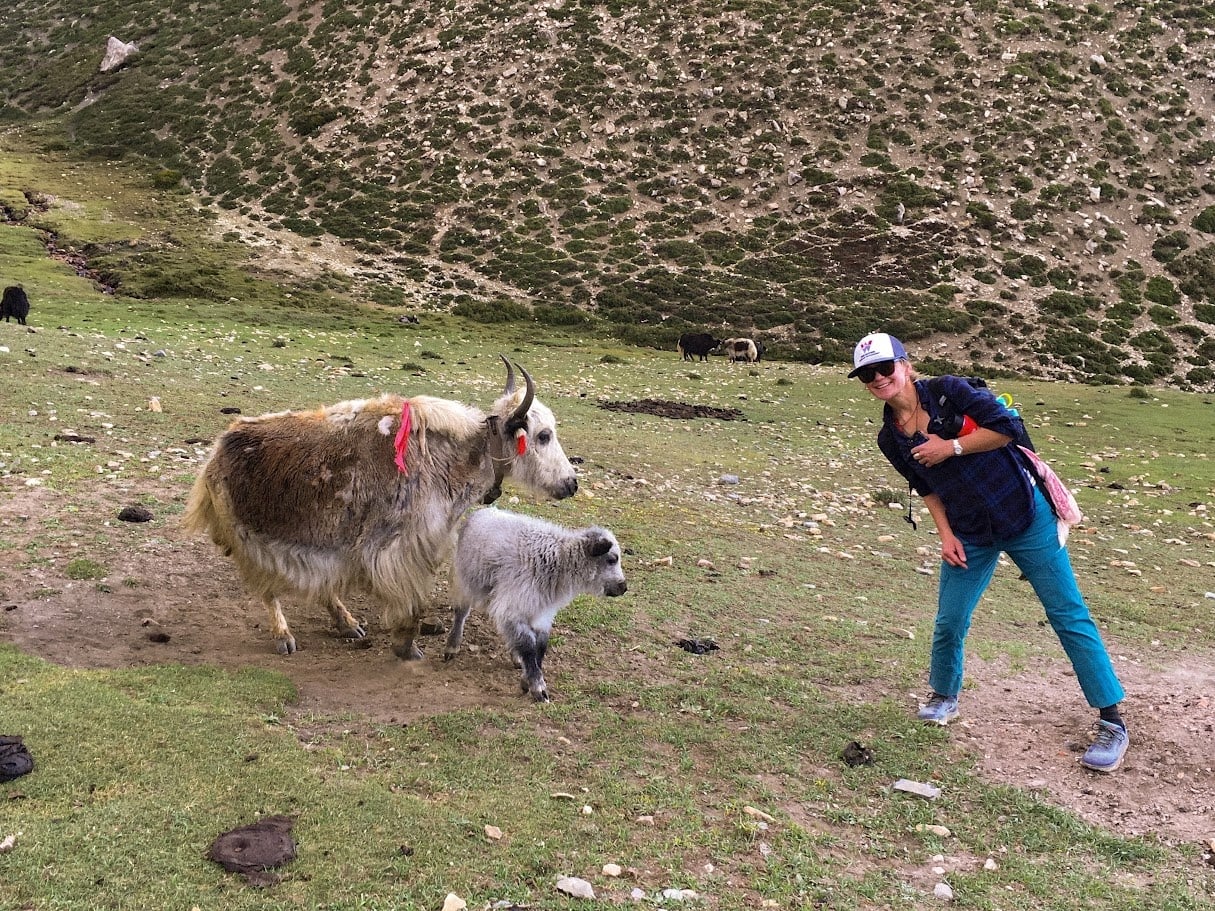
When Dr. Christina Buchanan treks into the Himalayas next year with an international team of scientists studying how altitude affects the female body, she’ll have to carry all her own research equipment. Fortunately, that means little more than a folding plastic step stool and a watch.
That’s because even the most basic equipment, in the right hands, can produce valuable data in a field of research that has fallen woefully behind.
According to the International Sisters High Altitude Research Expedition, or ISHARE, women represent about 40 percent of mountaineers worldwide. Yet they’ve been the focus of less than 7 percent of high-altitude studies.
In an effort to close that gap, Dr. Buchanan, a professor of Exercise and Sport Science at Western Colorado University who specializes in high-altitude exercise physiology, signed on to what ISHARE calls the world’s first all-women high-altitude medical expedition.
In September and October of 2027, more than 20 researchers from seven countries will trek toward 23,773-foot Putha Hiunchuli in the Himalayas, collecting data on the genetics, physiology, cognition, psychology, and sleep of premenopausal and postmenopausal Sherpa and non-Sherpa women at multiple elevations along the way.
“We’re all coming at it from different angles, and we all have access to everybody else’s data,” Dr. Buchanan said. “I’m going to be doing a very simple exercise test called a Queens College step test that I’ll use to estimate VO2, and also be looking at how that correlates with hemoglobin concentration, or menopausal status, or whether you’re Sherpa or non-Sherpa. So a lot of different variables.”
Her tool for that research – a 16.25-inch folding plastic stool – is deceptively simple. And simplicity is the point. A lot could go wrong while conducting research over 21 days on the way to a Himalayan base camp, 16,000 feet above sea level. Cold, fatigue, and equipment failure can complicate even the best-designed experiment at high altitude.
“That’s one reason why we’re doing the step test. We just need a stool,” she said. “We just want to get a greater understanding of how hormonal status impacts the way you are affected by altitude.”
After Dr. Buchanan learned about ISHARE from a former student, she reached out to the scientific organizer for the project, Dr. Martha Tissot van Patot, a 1987 Western graduate and prominent cardiovascular pulmonary physiologist, who told her the expedition still needed someone to run exercise testing.
“That’s our bread and butter,” Dr. Buchanan said.
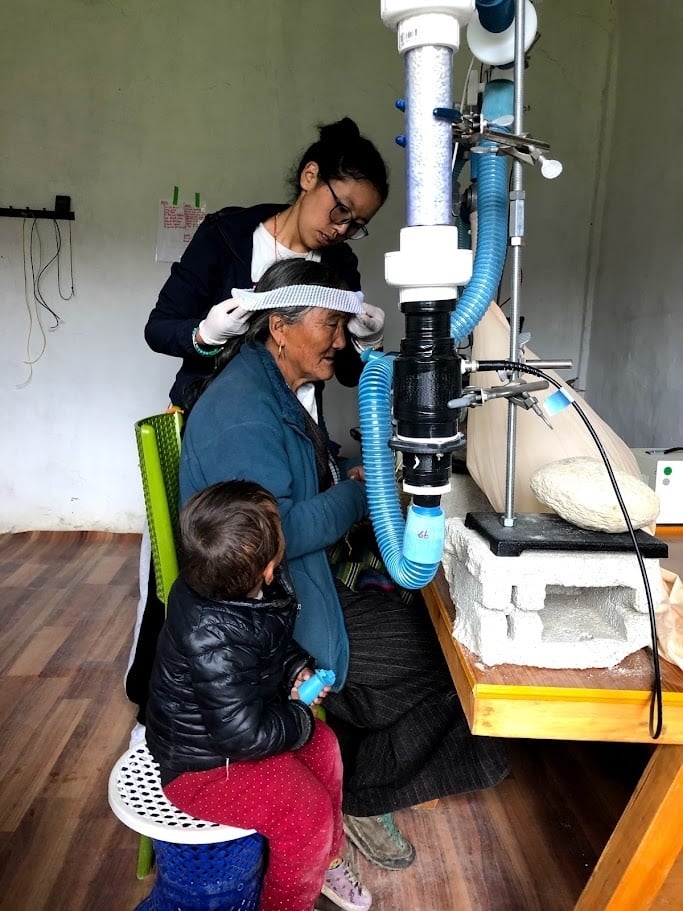
The project builds on years of her own work in high-altitude physiology. During a 2019 sabbatical in Nepal, she studied genetic adaptations and birth outcomes among Tibetan women. At Western, she studies hypoxia, directs student research, and teaches field-based testing and instrumentation, where students learn that research outside the laboratory requires equal parts scientific rigor and improvisation.
“I love the problem-solving,” Dr. Buchanan said. “I’d way rather be in the field than in the lab.”
And the implications of the research will reach far beyond Nepal. According to ISHARE, altitude illness can begin around 8,000 feet, making the research relevant to millions of women who live, work, or play in the mountains.
Dr. Buchanan hopes the findings will improve the information women get before traveling to altitude, and, closer to home, open new research opportunities for her students at Western.
“If what works for men does work for women, great, then we can keep doing it,” she said. “But if we find that it’s different, it would be nice to give women specific advice on how to prepare for altitude.”
To support Dr. Buchanan’s participation in ISHARE’s 2027 expedition, which will cost her about $14,000, visit western.edu/about/foundation.
Want to be a part of the story?
Turn your passion for health into a purpose-driven career. In the Recreation, Exercise & Sport Science Department, you’ll study movement, nutrition, and wellness in a supportive, hands-on environment—preparing for a future helping others live healthier, stronger lives.
Related Stories