MyWestern
 Academic Calendar
 Bookstore
 University Catalog
 Athletic & Recreational Venues
 MyWestern
 Academic Help
 Library
 Health & Wellness
 Campus Map
 Events

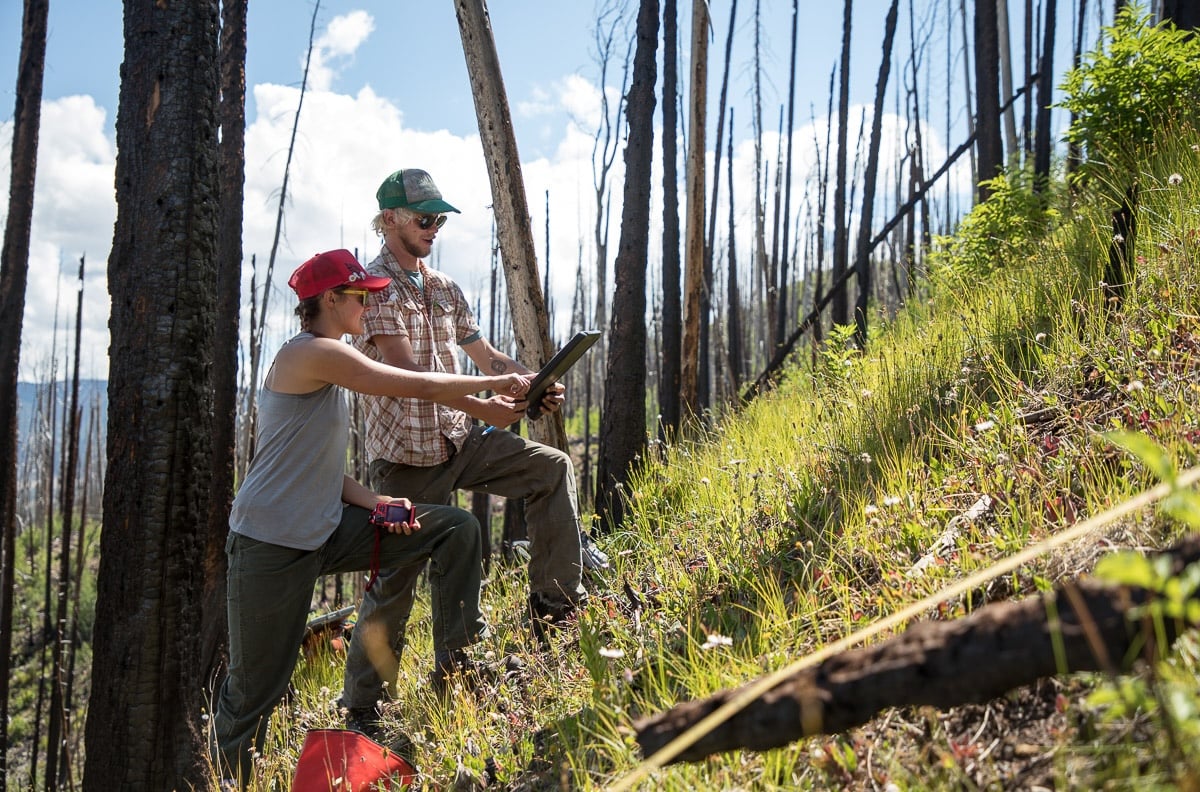
As a prolonged drought sets the stage for the record-setting wildfires that continue to race across forests in the American West and Canada, new research from Western Colorado University suggests the greatest change may not be how much land those fires burn, but what they leave behind.
The research, published by Western professor Dr. Jonathan Coop in the journal Science Advances, shows that the fastest-moving forest fires not only burn more area, but burn it more severely. That leaves fewer surviving trees to reseed the landscape, making it harder for forests to recover and opening the door to different species and vegetation types.
The study examined nearly 3,500 wildfires that burned in conifer forests across western North America between 2012 and 2023. The findings suggest that as conditions become more favorable for fast fire growth, forests may be increasingly pushed toward long-term ecological change rather than recovery.
“People often focus on the size of a wildfire because that’s what makes headlines,” Dr. Coop said. “But how fires burn is as important as how much they burn. In forests, fire speed not only increases acres burned but also leads to outsized impacts to each of those acres.”
The researchers, which include Dr. Coop and Dr. Jared Balik, a post-doctoral research associate at Western, as well as others from UC Berkley, the U.S. Forest Service, Colorado State University, the Canadian Forest Service, and elsewhere, analyzed more than 33,000 individual daily wildfire spread events for the study. They compared how quickly fires moved with what remained after they burned.
They found that as fire spread rates increased, so did the amount of forest experiencing near-total tree mortality and the distance to surviving trees capable of reseeding the burned area.
Many western tree species rely on nearby living trees to naturally repopulate burned areas. When severe fires leave large expanses without those seed trees, the forest has a harder time recovering and, in some places, may not recover at all, particularly under increasingly warm and dry postfire conditions.
Instead, those landscapes may gradually transition to shrublands, grasslands, or other vegetation better suited to warmer, drier conditions.
“The story isn’t just we’re getting bigger fires,” Dr. Coop said. “It’s that the kinds of fires we’re seeing today are creating fundamentally different landscape outcomes.”
The findings build on years of research examining how wildfire behavior is changing across western North America. Previous studies by Dr. Coop and his colleagues have shown that a relatively small number of extreme fire-spread events account for a disproportionate share of the total area burned each year and that changing climate conditions are increasing the likelihood of those extreme events.
This latest research shows that faster fires also reduce forests’ capacity to recover.
The findings also point toward practical strategies for helping forests adapt to a future of more extreme wildfires. The researchers highlight the importance of active forest management, such as thinning, prescribed fire, and managing fire burning under non-extreme conditions, and of expanding efforts to restore forests after they burn.
However, accelerated warming will pose growing challenges to traditional forest management and growing risks to forest ecosystems as long as climate change continues.
“Wildfire has always been part of western forests,” Dr. Coop said. “What’s changing is the pace and impacts of fires. As extreme events become more common in a hotter, drier climate, we can’t count on forests to persist or grow back the way they have in the past.”
Want to be a part of the story?
Join a community of scientists and environmental leaders dedicated to understanding and protecting the natural world. In Western’s M.S. in Ecology program, you’ll work closely with faculty mentors and fellow researchers as you develop the skills to investigate ecological systems, conduct meaningful field research, and address today’s most pressing environmental challenges.
Related Stories