MyWestern
 Academic Calendar
 Bookstore
 University Catalog
 Athletic & Recreational Venues
 MyWestern
 Academic Help
 Library
 Health & Wellness
 Campus Map
 Events

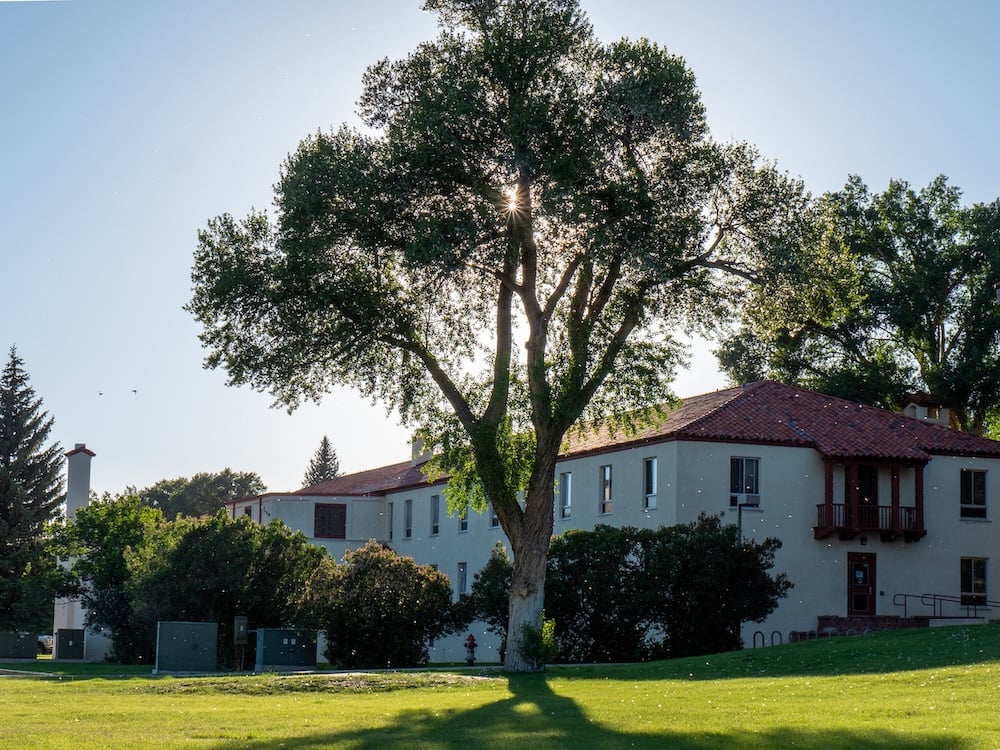
Look nearly anywhere in the Gunnison Valley, and you’ll find traces of Western Colorado University’s influence. But if you look a little further, you’ll find that influence in some unexpected places.
That Western has produced generations of teachers, business leaders, and scientists, and helped shape communities far beyond the Valley, is undeniable. That’s been the University’s mission since its founding 125 years ago.
What’s harder to explain is how a small college in rural Colorado helped shape an organization that would go on to influence the careers of hundreds of thousands of doctors, nurses, biologists, and medical researchers across the country.
But that’s exactly what happened.
By 1925, with Western in its second decade, one of the towering figures in the institution’s history, Dr. John C. Johnson, had already taught some of the first classes at what was then Colorado State Normal School.
He’d left to pursue a doctoral degree and returned to Western as Dean of the College and professor of biology. Along the way, he founded what would become the Rocky Mountain Biological Laboratory and ushered in the transition from a two-year teachers’ college to a four-year liberal arts institution, as well as a name change to Western State College of Colorado.
Incredible things happen when you give capable people enough time and space. And Johnson wasn’t done.
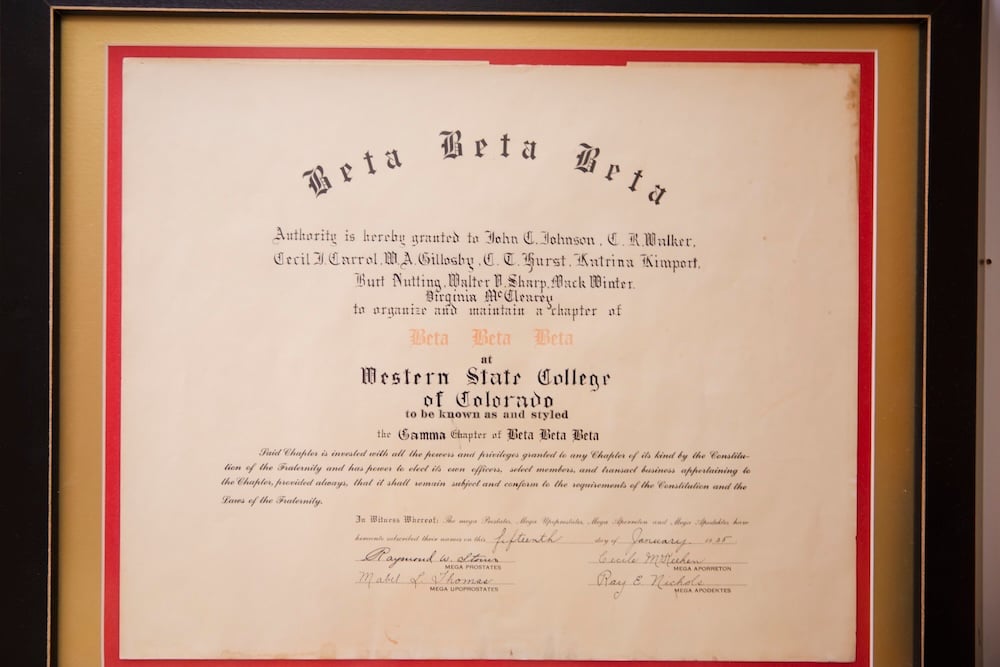
He’d heard of a small, regional biology fraternity, Beta Beta Beta (TriBeta), that had been established at Oklahoma City University in 1922, and he could see the value of a dedicated biological honor society for his students. He applied for a charter, which Western received on January 15, 1925, making it the second-oldest active chapter in the organization.
Because the founding chapter and the chapter at what would become Western Colorado University were among the only fully operational chapters by late 1925, they enlisted Southwestern College in Kansas to help turn what had been a secret student club into a national honor society.
Dr. Johnson traveled from Gunnison to meet with TriBeta’s founder, Dr. Frank G. Brooks, and together, they co-authored a national constitution, with Dr. Johnson as the organization’s first National Vice President.
A century later, the organization they helped build has grown into the country’s largest biological honor society, with more than 670 chapters and over 200,000 lifetime members throughout the United States and Puerto Rico.
Among the Western students listed on Western’s TriBeta charter is C.T. Hurst, who would go on to become one of the most influential college presidents in Western’s history. Other alumni through the years, according to Dr. Shan Hays, TriBeta’s current faculty advisor, would become doctors, dentists, nurses, and healthcare professionals of all kinds, as well as academics, game wardens, and research scientists at state and federal agencies, among other things.
“It is quite the honor,” Dr. Hays said of Western’s distinction within the organization. “I hope that other faculty members feel strongly about the group in the future and keep it going well beyond my time at Western.”
Legacy, after all, isn’t measured in years. It’s measured by what gets passed on.
“While TriBeta is an honor society, its focus is on biological research,” Dr. Hays said, “which is a boost for students applying to professional school in healthcare and is essential for students applying to Master’s and PhD programs.”
Every year, Western’s cohort travels to regional and national TriBeta conferences, where they can meet other biology students with similar career interests, see what research is being done, grow their professional networks, and present their research in a poster competition.
And if they win the competition, they’ll bring home the organization’s prestigious national award for the best undergraduate poster presentation, the John C. Johnson Award, serving as a reminder that Western’s influence truly knows no boundaries.
Want to be a part of the story?
Explore the natural world in a community of curious minds and committed changemakers. In the Natural & Environmental Sciences Department, you’ll work alongside faculty and peers—conducting research, asking big questions, and finding solutions that matter.
Related Stories