MyWestern
 Academic Calendar
 Bookstore
 University Catalog
 Athletic & Recreational Venues
 MyWestern
 Academic Help
 Library
 Health & Wellness
 Campus Map
 Events

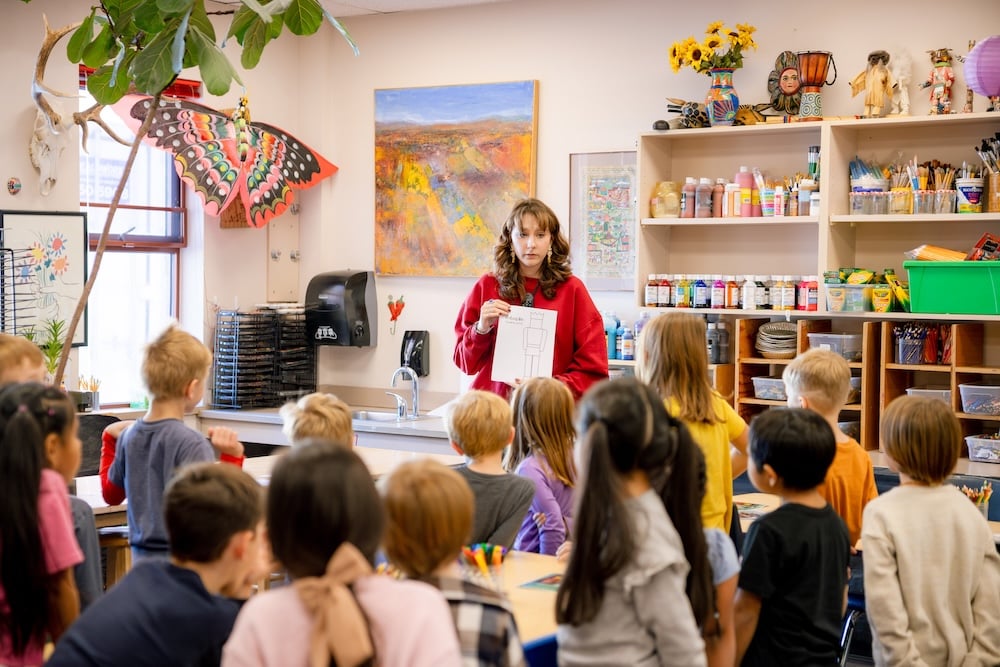
Teacher shortages have become a persistent problem for school districts across Colorado, particularly in rural communities where recruiting and retaining qualified faculty can be a challenge.
In the Montrose County School District (MCSD), that challenge has led to an evolving, if informal, partnership with Western Colorado University that creates opportunities for working teachers who need to complete their licensure, while also building a steady pipeline of Western students gaining classroom experience before they graduate.
Over the past several years, faculty in Western’s Education Program have worked closely with MCSD Recruiting and Retention Coordinator Ben Stephenson to develop a system that meets the needs of both the district and future teachers.
“We met a few years ago and, every year, have worked together to figure out different ways that we can support them, and they can send us educators who want to be licensed,” said Professor Cori Woytek, Western’s General Education Clinical Coach and Residency Program Coordinator.
That collaboration has taken shape as a two-way street. Western students complete a year-long residency in Montrose schools, working as instructional facilitators, while MCSD sends paraprofessionals and working teachers back into Western’s programs to earn their licensure without ever leaving the classroom.
Rethinking the Classroom
At MCSD’s Johnson Elementary, that partnership is playing out inside one of the district’s most innovative learning environments.
Through its Teaching and Learning Academy, the school is rethinking how a traditional classroom should look. Students are organized into “houses,” where teams of educators, including lead teachers, instructional facilitators, and support staff, work together with large groups of students, breaking instruction into smaller, targeted sessions in reading, writing, and math. It also allows students to learn from peers who have a greater mastery of the subject matter.
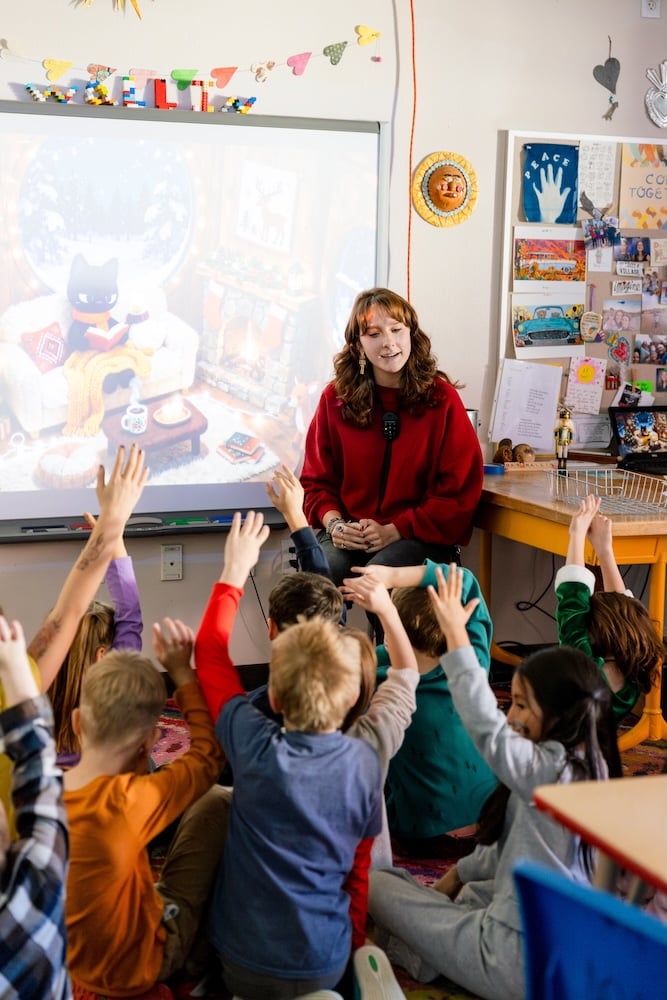
Western undergraduate and graduate students in their residencies are hired as instructional facilitators, supporting students while they complete their teacher licensure coursework.
“It’s not like a traditional model that I went through when I was in my education program, where I completed all of my coursework prior to stepping into my student teaching semester,” Woytek said. “They are working in the school as educational facilitators while they are simultaneously completing application-based pedagogy coursework and residency requirements. It’s a true ‘on-the-job’ training model.”
That model is made possible, in part, by the growing use of alternative licensure pathways across Colorado.
Teaching While Earning a License
Faced with ongoing teacher shortages, districts are increasingly hiring teachers without a license, allowing them to teach while they pursue licensure through an approved education program.
“There are a lot of people applying that just weren’t necessarily licensed yet,” said Mandy Baur, Western’s Coordinator of Educator Preparation and Colorado Department of Education Licensing Officer. “If a position is open, they can step in and fill that at the same time that they’re getting their license.”
Those students make up a significant portion of Western’s graduate program. Typically, about half of the University’s education students are graduate-level “alternative residents” earning their licensure while working in the classroom.
Others take a more traditional route through the undergraduate or graduate pathways, or are paraprofessionals seeking to advance their careers through Western’s Adult Degree Completion program.
Regardless of their approach, Western’s program is built around a year-long, classroom-based model that allows students to apply what they are learning in real time.
“They’re taking all of their coursework at the same time that they’re actually implementing what they’re learning into the classroom,” Baur said.
From Residency to Full-Time Roles
For districts like Montrose, that structure offers a clear advantage. By the time Western students complete their programs, they’ve already spent a full academic year working within the district, gaining familiarity with its curriculum, instructional models, and expectations. In many cases, that experience leads directly to employment.
“In the 15 years that I have been at Western, 60% to 70% get hired in the same district in which they completed their residency experiences,” Woytek said.
Montrose isn’t the only district looking to Western for support. Partnerships in Cañon City, Delta County, and Gunnison also reflect a growing demand for programs that can serve rural schools and provide flexible pathways into the teaching profession.
“We’re committed to figuring out where we can be flexible as a program in supporting district needs, and partner with them to best support our students,” Woytek said. “We’ve definitely done a lot of work to get our name out there at the state level, letting them know that we are an institution that can and wants to serve small rural schools. And we’re still growing.”
Start your education career.
Join a community of passionate educators committed to making a difference. In the Education Department, you’ll gain the skills, support, and hands-on experience to inspire the next generation, starting in your own classroom and beyond.
Related Stories