MyWestern
 Academic Calendar
 Bookstore
 University Catalog
 Athletic & Recreational Venues
 MyWestern
 Academic Help
 Library
 Health & Wellness
 Campus Map
 Events

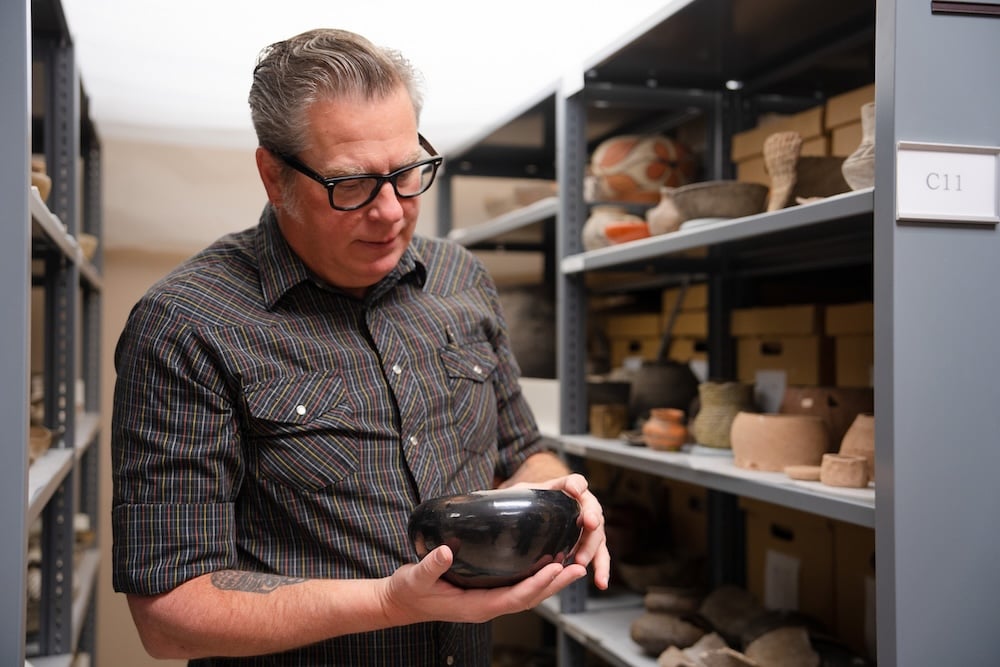
The human remains kept in Western Colorado University’s Hurst Museum are one step closer to returning to their final resting place after a Notice of Inventory Completion was published in the Federal Register on April 2, marking a significant milestone in the University’s repatriation efforts under federal law.
According to Western anthropology professor, Dr. David Hyde, who has been overseeing the repatriation process, a Notice of Inventory Completion (NIC) under the Native American Graves Protection and Repatriation Act (NAGPRA) is a formal, federal notification that a museum or federal agency has identified the cultural affiliation of Native American human remains or cultural items.
In August of 2023, Western received an $81,000 grant to fund the repatriation process, which kicked off a two-year effort to catalog all Native American human remains in the Hurst Museum, including those that were part of the Peterson Collection, donated to the University in 1946.
The work is part of a broader national effort by museums and universities to address historical collecting practices and comply with new federal expectations under NAGPRA.
NAGPRA, which was signed into law in 1990, also required the University to contact Tribes to whom the remains might belong. That consultation process often moved slowly, in part because many Tribes faced limited capacity while responding to similar requests from institutions across the country.
Publishing the NIC in the Federal Register is a critical step forward in the legal repatriation process, Dr. Hyde said, and officially informs tribes of the findings, allowing them to submit written requests for repatriation of ancestral remains and cultural objects.
Because the remains and artifacts in Western’s collection had unknown origins, even after a careful study and consultation with elders from the Ute Mountain Ute, Southern Ute, and the Pueblo of Zia tribes, Dr. Hyde was only able to establish that the remains and associated artifacts came from the Four Corners region, generally.
Western wasn’t alone in facing such long odds; many cultural institutions, from the Smithsonian to small local museums across the West, were in similar circumstances. To make repatriation possible for those organizations, several Tribes in the southwest arranged with the Bureau of Reclamation to host a large reinternment on public land this fall.
A small delegation from Western, led by Dr. Hyde, plans to attend the reinternment ceremony to fulfill the University’s legal obligations. More importantly, Dr. Hyde said, the ceremony is an opportunity to honor the ancestors once housed in the Hurst Museum and help bring that chapter of the University’s history to a close.
“This is work that should have been done long ago, and moving this process forward is deeply important to me,” Dr. Hyde said. “Completing the Notice Inventory Completion takes us one step closer to bringing the ancestors home so they can finally rest nearer to their communities. Repatriation is a legal responsibility, but it is also a moral one, and we are honored to be part of this work.”
Related Stories