MyWestern
 Academic Calendar
 Bookstore
 University Catalog
 Athletic & Recreational Venues
 MyWestern
 Academic Help
 Library
 Health & Wellness
 Campus Map
 Events

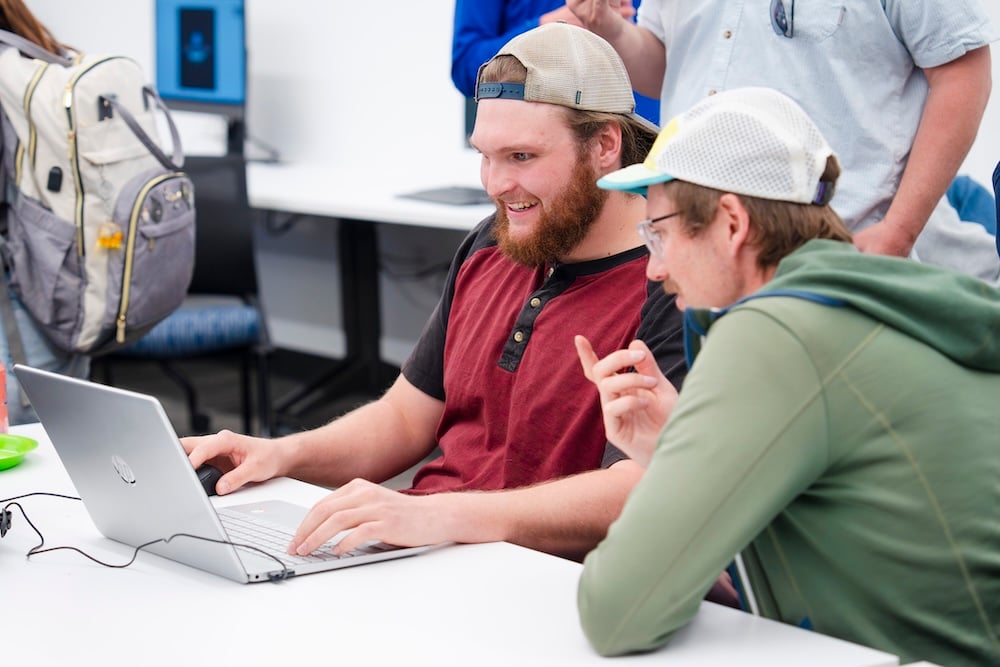
It was after hours in Western Colorado University’s Quigley Hall on a recent Wednesday, and a couple of dozen students filled their plates from a stack of pizza boxes before spreading out to computers scattered around the room, each with a video game queued up and ready to play.
“Seeing students from across departments show up in force and genuinely get excited about what their peers created,” said Quinn Davis, who created Western’s first Game Jam, “that’s what this is all about.”
When Quinn first arrived at Western as a first-year student in the fall of 2024, there wasn’t anything like it on campus. But he was familiar with the Game Jam format, which gives programmers a set time to build the best video games they can from the ground up, and thought it would be something fun for his fellow Computer Science majors.
“When I first came here, I wanted to try to see if there were any clubs that did game development or any kind of programming-related stuff,” he said. “And there was nothing, so we created this club.”
With the help of Computer Science Professor Sam Micka, Quinn started the club without really knowing what it would become. He just wanted a place for like-minded people, to get together to program and build things. They could be video games, web or desktop applications, anything really, as long as they could do it in a setting that was more social than school.
Only around a half-dozen students came the first night, and all of them studied Computer Science. So Quinn put out a poll to see what they wanted to do. When the votes were in, the results were clear. “Game Jam was the most popular,” he said. “And I figured that would play pretty well.”
Then their excitement ran into the reality of building a video game from scratch, which might have been more of a commitment than many of them realized. But slowly, the excitement came back and started to spread to other students, some in majors like engineering and art.
“It’s a lot of work for sure. So there are multiple skills you need to develop. Programming is definitely a big one, but it’s not at all the most important,” Quinn said. “We have art design and music design, which are also hugely important. This semester, we’ve done a lot of work trying to reach out to the art departments and get more artists in, which has been pretty successful.”
The club that grew out of those initial meetings has turned out to be what he was hoping to find when he first arrived at Western from the East Coast.
Finding a Path Forward
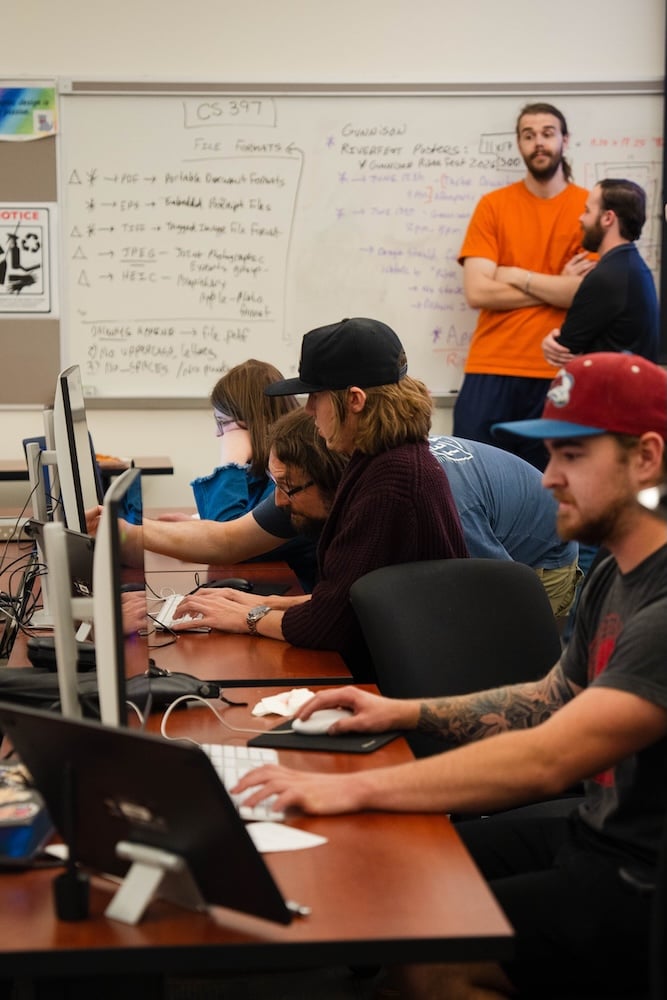
Quinn came to Western to build things, without knowing exactly where he would start. But his journey to Gunnison wasn’t a straight line out of high school, like it was for many of his peers. That gave him the time and space to learn how to start a project and see it through to the end.
Long before he enrolled, he’d come to the Gunnison Valley to go camping and ride his dirt bike, which was a passion he had growing up in New Hampshire. Like a lot of kids, he also loved playing video games, maybe a little more than his parents were comfortable with. So, they kept it to an hour a day.
That didn’t dampen his love for gaming, but it did give him more time to be outside, where he rode dirt bikes and, as often happens, learned how to fix and modify their engines.
After high school, he parlayed that knowledge into a job working at a local Toyota dealership, where he moved up through the ranks from doing oil changes to becoming one of the dealership’s mainline techs. “Cars were a pretty realistic way to make money off of some of that knowledge,” he said.
He enjoyed diagnosing mechanical problems and liked doing something he’d developed a knack for. But soon he realized he wasn’t going to do anything much more interesting than pull and replace parts. And Quinn is a big guy, standing well over six feet tall, so he knew that bending over an engine or being under a car wasn’t something he’d want to do forever.
In his third year as a mechanic, he started dabbling in computer programming and computer science, building small applications and other programs. Before long, he was considering his hobby as a potential career and started looking to the horizon. “I was just trying to do something where there’s more growth,” he said.
That’s when he remembered Gunnison and how much he loved the landscape. Then he found out Western had a Computer Science program and applied. By the fall of 2024, he was enrolled and driving west.
Building Game Jam
When he arrived, he already had a semester at a community college under his belt and brought with him some life experience, a love of building and fixing things, and a focus on setting himself up for the future. But he also wanted to make some friends.
Starting a Computer Science, or CS, Club and the campus’s first-ever Game Jam checked all of those boxes. And the format was simple: participants would break up into teams, pick a theme, and spend eight weeks building a game from scratch that anyone on campus could play at a semester-end event.
Depending on their level of programming prowess, some participants made games on the level of Pac-Man or Tetris, while others built multiplayer games or games that require the players to navigate fictional worlds that take multiple team members dozens of hours each to build.
Along the way, CS Club members learned how to use the game design and physics engines that are industry standards and allow characters to move naturally and interact with their environments in lifelike ways. They’re also using software development tools like GitHub that will give them a big advantage as they start thinking about a career after Western.
But perhaps the most valuable skill he and the other CS Club members are learning is teamwork, “because that’s an overlooked skill in Computer Science,” Quinn said. “I mean, you can be extremely bright and really good at code and software, but ultimately, if you’re not able to work with other people well, it makes it a lot more difficult to get a job. So learning to work with other people is huge.”
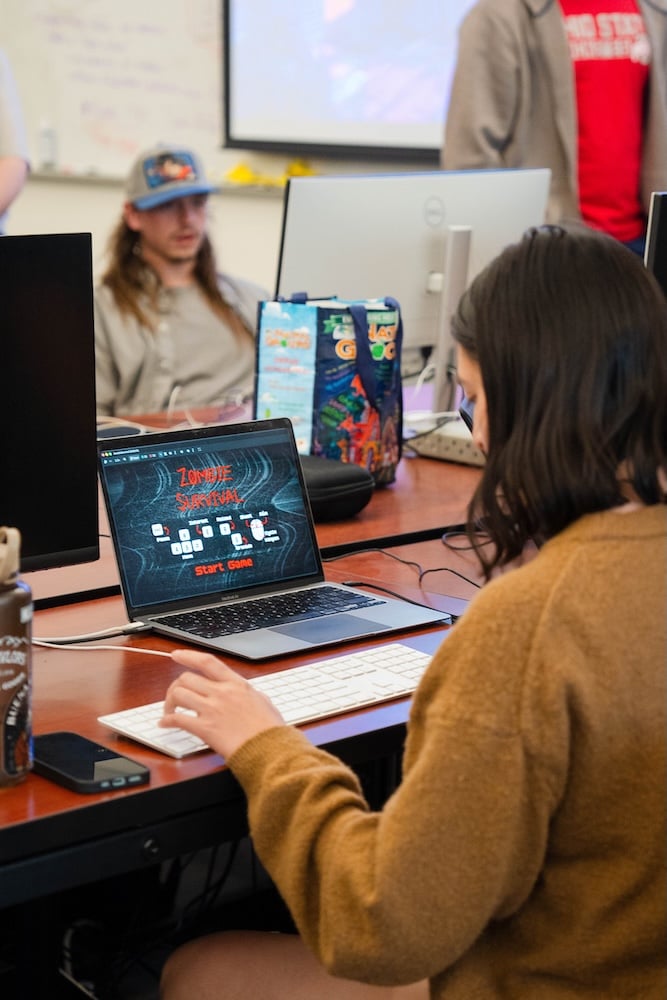
At the Game Jam in Quigley Hall, that skill is on full display, as six teams have several computers with their games playing, with players rotating around to each one, eating pizza, and just hanging out.
“It’s a great opportunity for students to see what’s possible with the club,” he said. “And also, if you want to get into programming, it’s definitely a more exciting way to do it.”
Want to be a part of the story?
Join a collaborative community of problem-solvers, coders, and critical thinkers. In the Math & Computer Science Department, you’ll tackle real challenges, build in-demand skills, and create innovative solutions.
Related Stories