MyWestern
 Academic Calendar
 Bookstore
 University Catalog
 Athletic & Recreational Venues
 MyWestern
 Academic Help
 Library
 Health & Wellness
 Campus Map
 Events

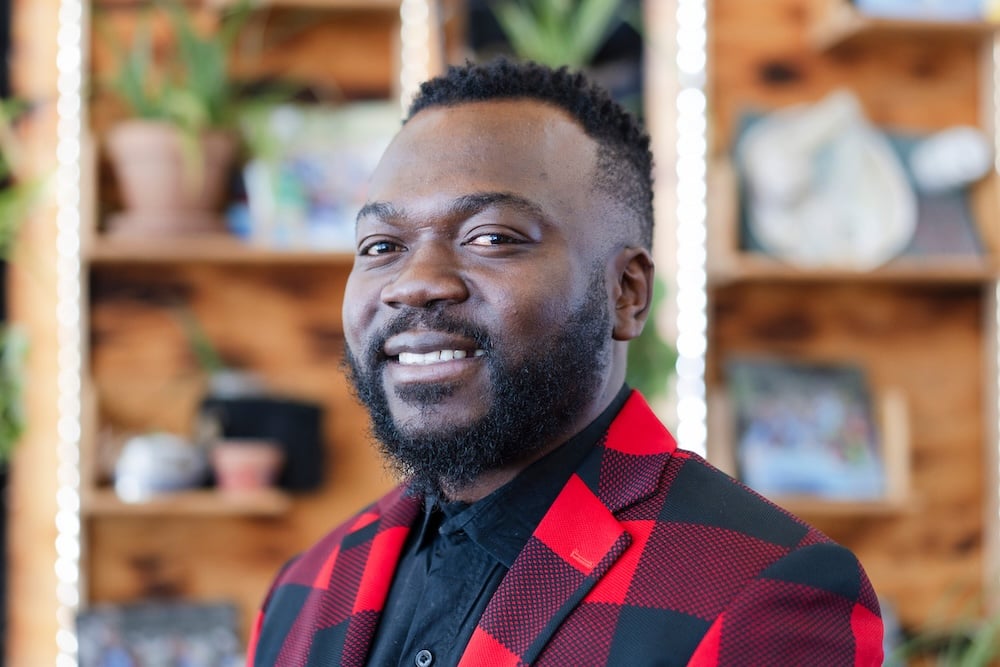
You’d be forgiven for failing to see the environmental similarities between the Navajo Nation, situated in the high desert of the Colorado Plateau, and equatorial Cameroon, in Central Africa. But take it from Franklin Ngalim; the similarities are there. In fact, on a tour of the Shiprock, Church Rock, and Cove communities around the Four Corners region last June, he could see the future of his homeland.
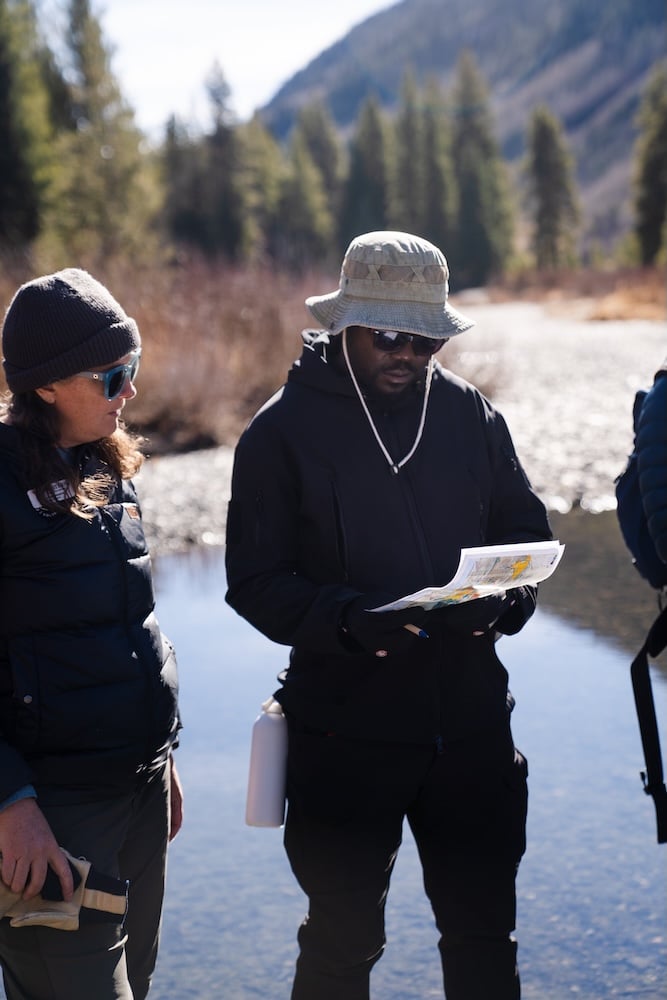
The tour took Franklin and 16 other students from Western Colorado University and several other colleges to communities that support, or supported, hard rock mines to learn what the impacts of poorly regulated mining can look like.
Today, they look like multi-million-dollar remediation projects attempting to claw back a livable landscape, removing more than 1 million cubic yards of contaminated dirt and rock, while communities continue to struggle with the lingering effects of displacement, poor health, and cultural loss.
“Cameroon is very, very rich in terms of minerals. And right now, they just want to make the money. But nobody’s talking about the cost of making that money. And just like with the US mining boom, in 50 years it will cost a lot to clean up,” Franklin said. “I’m really hoping that I can use this experience to raise awareness back in my community about the impacts of development.”
Franklin has spent years talking about the dangers of pollution, waste management, biodiversity loss, and climate change back in Cameroon. He’s been invited to appear on television and radio to talk about the work he does to get ahead of his country’s piles of plastic trash. “Cameroonians know me,” he said, “and the work I do.”
Building an Environmental Movement
In 2009, he started a non-profit called The Greens with the hope of raising awareness and support to launch projects, build infrastructure, and educate the public, tackling what seemed like an insurmountable problem. He’s also seen his country’s leaders enact a ban on single-use plastics, yet make no effort to enforce it.
“Cameroon has amazing laws. Always on paper. Implementation is a big, big problem,” he said. “If you come to Cameroon, you’d be like, ‘Wait, did they say plastic was banned? Or did they encourage people to make more?”
As a result, despite his best efforts, Franklin has struggled to break through the economic and political headwinds that keep his fellow Cameroonians from executing on what they know is the right thing to do.
A New Path to the U.S.
But, because of the work he was already doing in Cameroon to repurpose used tires and recycle waste, in 2023, he was offered a scholarship to travel to the U.S. for the first time and attend the Earthship Academy in Taos, NM, where he also learned about Western’s Master of Environmental Management (MEM) program. After training at the Academy for a month, he traveled to Tennessee to put his skills to the test, building an Earthship from old tires, aluminum cans, and glass bottles.
And while the idea of an Earthship made intuitive sense, he couldn’t find any in-depth studies that quantified the positive environmental impact they had. So he enrolled in the MEM program with the hope of conducting a life-cycle assessment of Earthships to establish how much carbon the homes sequestered, how much landfill space they saved, and how much food production they could sustain, all with the hopes of returning to Cameroon to apply what he’d learned to bring about change in waste management and housing.
From Plastic Waste to Mine Waste
But since arriving at Western, he’s come to see that waste is far more than what we throw away. As someone who studied geology as an undergraduate and has spent more than 15 years working in waste management, it’s become clear that he needed to think bigger than plastic bottles and used tires. He needs to think about how mine waste is being left behind for future generations to manage at enormous cost.
“It is mind-blowing to look at how much financial and technological input is required to reclaim abandoned mines. But it is also scary, because there are currently a lot of mining projects that are ongoing in the Global South, where lots of deals are being signed for the exploitation of natural resources. But no one is talking about how they are going to deal with the waste.”
When Development Leaves a Scar
In Cameroon, small-scale ‘artisanal’ mining operations have already reshaped the landscape, diverted waterways, and contributed to landslides that have claimed lives. At the national level, he says, environmental policy often exists without enforcement.
“It’s a really tough place, because when you’re trapped between poverty and socio-economic development, you rarely think about consequences,” he said. “And inasmuch as we expect our politicians to be educated and informed about the consequences of mining, I wonder if they really understand the long-term impacts.”
After years of building The Greens and being a leading voice in the environmental conversation at home, Franklin has realized that knowledge alone isn’t enough to drive change. In Cameroon, credibility often comes with credentials.
“One of the key reasons I decided to get my MEM was to be able to influence more people, as well as the state,” he said. “If I get a master’s degree from the United States, it’s no longer going to be just Franklin talking. Now, it carries a lot of weight.”
Building Credibility for Change
To put that credibility to use, Franklin has developed what he calls his 2030 Project, aimed at finding investors and collaborators who will help him build a sustainable construction and research academy, acquire the equipment he needs for large-scale recycling, and start conversations about sustainable mining, mine remediation, and reclamation across the Global South.
It’s a vision shaped by everything he’s seen, from the mines of the American Southwest to his community back in Cameroon. And with a master’s degree, a plan, and collaborators in place, he hopes to start implementing his plan in the next few years.
For Franklin, the work is deeply personal. His daughter is 13, his son is 8, and they’ve grown up working alongside him, helping recycle the trash others throw away. He’s not just thinking about what can be built today, but what will be left behind for them.
“No one is coming to save us,” he said. “It’s just me and the people who are working hard to create change.”
Lead the Change You Want to See
Join a community of bold thinkers and passionate problem-solvers. In the Master’s of Environmental Management program, you’ll dive into real-world research, work side-by-side with faculty and peers, and develop the skills to create lasting environmental impact.
Related Stories