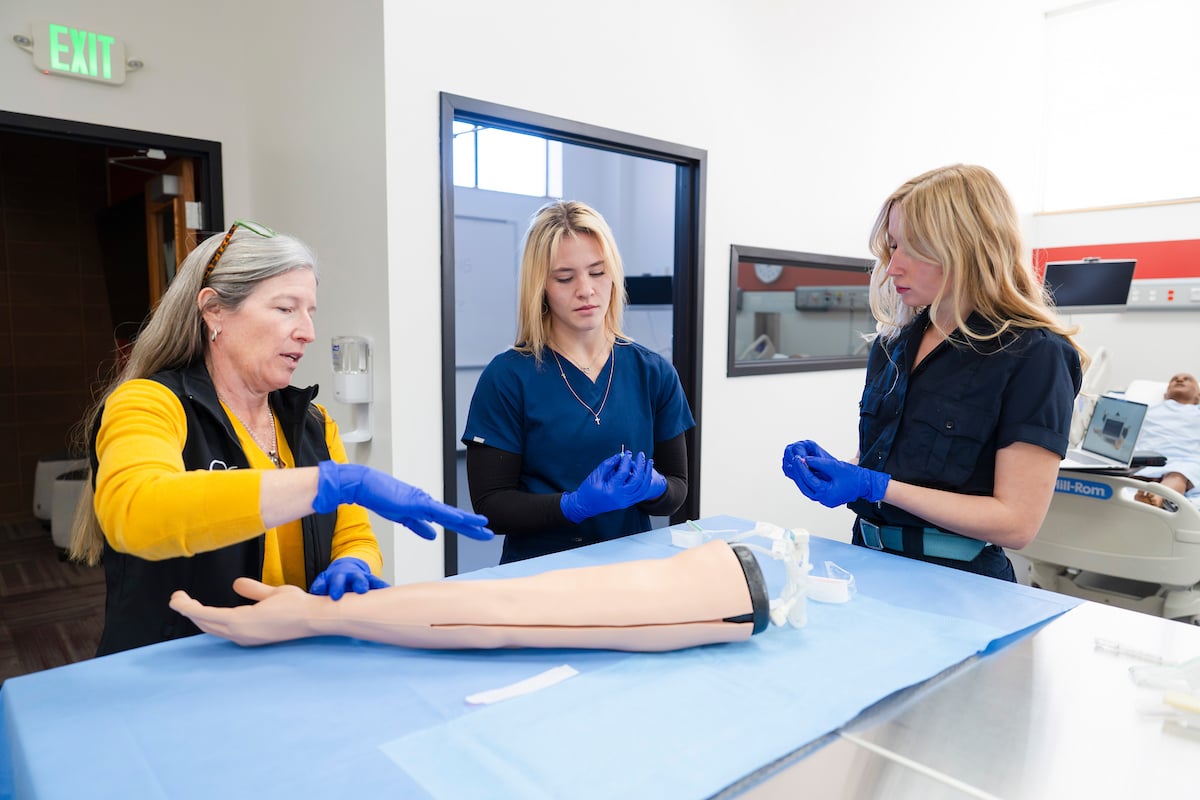
The Western Colorado University (WCU) Bachelor of Science in Nursing (BSN) Program is committed to educating competent, ethical, safe, and professional entry-level nurses who are prepared to deliver high-quality care across diverse settings.
Nursing students must meet certain technical standards—with or without reasonable accommodation—to progress successfully through the program and to provide safe, effective care during clinical learning experiences.
These standards reflect the essential functions of a student nurse, not admission criteria, and are consistent with the expectations of the Colorado State Board of Nursing, AACN Essentials, the Americans with Disabilities Act (ADA), and Section 504 of the Rehabilitation Act.
Board of Nursing: Laws, Rules, and Policies
Colorado does not codify statewide technical standards; responsibilities lie with institutional staffing committees and employer-level policies under HB 221401.
The Scope of Practice for Registered Nurses is applicable for the state to whichthe registered nurse works. The Colorado Department of Regulatory Agencies and the Scope of Practice is available at https://dpo.colorado.gov/Nursing/Laws. All states Scope of Practice is retrievable at the Find Your Nurse Practice Act here https://www.ncsbn.org/npa.htm. The practice laws are covered in the curricula and students can reach out to faculty for details.
WCU and all clinical sites expect nurses to meet standards in physical ability, cognition, communication, and emotional resilience. WCU provides reasonable accommodations for qualified students with documented disabilities. A reasonable accommodation is a modification that allows equal access without fundamentally altering the essential nature of the nursing curriculum, compromising patient safety, or reducing academic or clinical standards.
I. Observation / Sensory Abilities
Students must be able to obtain information from demonstrations, laboratory experiences, written materials, and clinical settings.
The student must be able to:
- Observe and participate in nursing-centered lectures, demonstrations, and
simulation activities.
- See and interpret health assessments, patient responses, monitors, and waveform
readings.
- Use functional vision, hearing, touch, and smell to assess patients.
- Detect changes in color, pupil size, wounds, or other visual cues.
- Able to detect bodily sounds and alarms even in noisy environments.
- Use tactile assessment to palpate pulses, identify edema, assess temperature.
- Recognize odors that indicate clinical concerns.
II. Communication Abilities
Students must communicate effectively, respectfully, and professionally per WCU requirements in the Student Handbook.
The student must be able to:
- Communicate clearly with patients, care team, and staff.
- Interpret and respond to nonverbal cues.
- Document accurately and promptly in EHR systems.
- Teach, direct, and counsel individuals with varied health literacy.
- Use professional language and medical terminology.
- Utilize digital platforms reliably.
III. Motor Abilities
Students must possess gross and fine motor skills sufficient to provide safe and effective nursing care.
Gross Motor Skills:
- Move freely in clinical environments and confined spaces.
- Maintain endurance for long clinical shifts.
- Lift, move, and transfer patients safely (minimum 50 lbs with assistance).
- Perform CPR and emergency interventions.
Fine Motor Skills:
- Perform precision-based procedures (IVs, injections, catheters, wound care).
- Use diagnostic tools safely.
- Measure medications accurately.
Emergency Motor Responses:
- Open obstructed airways.
- Apply pressure to stop bleeding.
- Activate emergency systems.
- Respond immediately to patient changes.
IV. Intellectual, Conceptual, Integrative, and Quantitative Abilities
The student must be able to:
- Read, understand, and apply written materials.
- Interpret and integrate data from labs, imaging, vitals, and patient reports.
- Perform accurate calculations for medication dosages.
- Analyze findings to formulate nursing diagnoses.
- Integrate pathophysiology and pharmacology.
- Recognize and respond to evolving conditions.
- Understand spatial relationships for procedures.
V. Behavioral, Social, and Professional Attributes
The student must be able to:
- Use sound judgment in routine and emergent situations.
- Maintain professionalism and integrity.
- Form therapeutic relationships with diverse individuals.
- Maintain attention and ensure patient safety.
- Accept feedback and adapt behavior.
- Tolerate physically and emotionally demanding workloads.
- Demonstrate resilience and emotional regulation.
- Provide care in acute, outpatient, long-term, community, rural, and mental health
settings.
- Care for patients with communicable diseases using precautions.
- Manage rapid changes and high-pressure environments.
- Understand WCU student services and resources to assist with stress management.
VI. Health-Related Requirements
The student must:
- Maintain immunizations per clinical site requirements.
- Keep BLS certification current.
- Complete OSHA, HIPAA, and safety trainings.
- Meet background and drug screening requirements.
- Maintain health insurance.
- Complete physical examinations as required.
- Report health conditions impacting performance.
VIII. Accessibility and Reasonable Accommodation
The Western Colorado University (WCU) Bachelor of Science in Nursing (BSN) Program is committed to ensuring that all students— including those with disabilities—have equitable access to its facilities, programs, learning experiences, and services. In accordance with Section 504 of the Rehabilitation Act of 1973, the Americans with Disabilities Act (ADA) of 1990, and the ADA Amendments Act of 2008 (ADAAA), WCU supports the right of qualified students with disabilities to study and practice nursing with or without reasonable accommodation.
The BSN Program provides reasonable accommodations on a nondiscriminatory basis, consistent with federal and state law, to ensure that students with documented disabilities have equal opportunity to meet the academic and technical requirements necessary for successful progression and graduation.
Students requesting accommodations must contact the Center for Disability and Accommodations at Western Colorado University to initiate a request for accommodations because of a disability.
Email: disabilityaccommodations@western.edu
Phone: 970.943.2113
Website: www.western.edu/cda
Office: Leslie J. Savage Library 121 & 122
The Center for Disability and Accommodations collaborates with the Nursing Program to determine appropriate accommodations that support student learning while upholding the essential requirements and technical standards of the BSN curriculum.
IX. Student Acknowledgment
Students must sign the annual acknowledgment confirming:
• They understand the technical standards,
• They can meet them with or without accommodation,
• They will notify faculty if they can no longer meet them,
• They understand non-compliance may impede progression.
 MyWestern
 Academic Calendar
 Bookstore
 University Catalog
 Athletic & Recreational Venues
 MyWestern
 Academic Help
 Library
 Health & Wellness
 Campus Map
 Events