MyWestern
 Academic Calendar
 Bookstore
 University Catalog
 Athletic & Recreational Venues
 MyWestern
 Academic Help
 Library
 Health & Wellness
 Campus Map
 Events

Write What You Know? Maybe Not So Much.
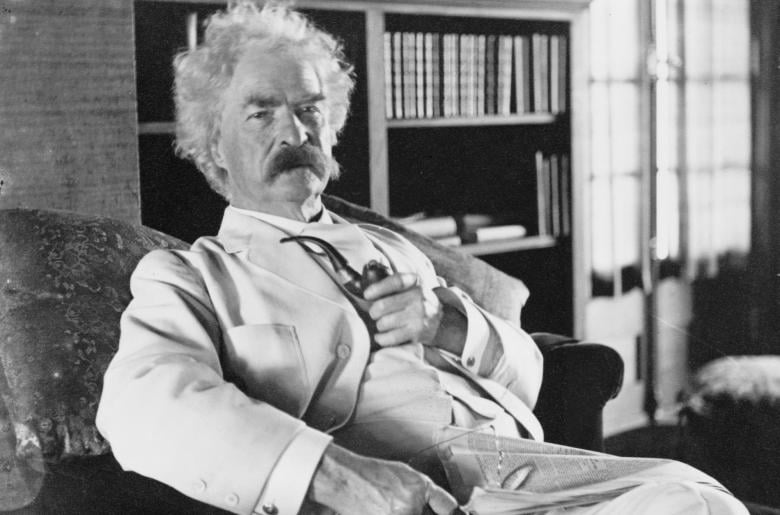
It’s probably somewhat fitting that the origins of the phrase “write what you know” are a matter of debate. Most commonly attributed to Mark Twain, and advocated rather cavalierly by many folks, writers and non-writers alike for years, the haziness around who first uttered those four words feeds right into the same haziness around what it might mean. And, as a screenwriter, educator and longtime professional script reader, I can attest to the fact that “write you know” can be rather poor (and far too offhand) advice for writers.
Write What You Know About
As a first step into dissecting and rethinking the timeworn phrase, see what happens when you add that one extra word to it. Writing what you know about already suggests a knowledge base from which you can create a story, incorporating facts and details about a profession you may have practiced or a craft-related expertise you may have developed. Make no mistake, fashioning a story is the primary responsibility of a screenwriter, and the sense of authority that comes from getting the authentic details correct–in the middle of your made-up narrative–is what helps your work leap off the page for a reader.
HBO Max’s The Pitt showrunner R. Scott Gemmill has extensive emergency room experience and employs physician Joe Sachs on the writing staff along with other consultants from the medical field. Director Kathryn Bigelow not only trusted her former-journalist screenwriter Noah Oppenheim’s House of Dynamite screenplay to deliver on what might happen in a nuclear worst-case scenario, but also did copious research on her own and surrounded herself with experts, including some cast members with military backgrounds. So, write what you know about also becomes learn what you need to know about (in order to write it).
Where The Truth Lies
“Where the Truth Lies” happens to be an early promotional tagline for the notable television series Mad Men, but it provides a nice little window into a different truth. Which is this: to tell a story, you must make up a story. In my career as a script reader, the biggest misinterpretation of “write what you know” was most often manifested in screenplays that simply related the direct experience of the author, often as a way of working through pain or validating their individual life’s journey as being an interesting one, worthy of relating. “Write what you know” seen through the lens of “write what you’ve been through,” however, is more a reporting of events and does not satisfy the requirements of storytelling.

Okay, So What Are These Requirements?
The work of a writer is not to report, but to interpret. To look at the progression of a character and devise a fictional way of getting at a universal truth. Even those who are telling true stories must find a “way in” to the why and wherefore of what happened in history. Screenwriter Graham Moore, whose The Imitation Game won an Oscar for Best Adapted Screenplay, speaks of the goal of a true-life story to provide an overall sensation for the viewer, rather than to simply relay the facts. So, to take “write what you know” far too literally can rob work of its inherent power to, as Aristotle put it in Poetics, restore our “instinct for harmony and rhythm.” When we reach the end of a well-told tale, we have made sense of the world through the interpretation of the writer. Without that interpretation, there is no sense to be made. If an author writes only what they have been through, on the assumption that it carries weight simply because it happened to them, they are depriving the reader (and, later, viewer) of knowing what to understand, what to take away from, the organization of events as designed by a writer. That is, a writer who incorporates what they know about into the telling of their fictional circumstances. As Emily Gordon, screenwriter of The Big Sick, astutely observed: “Often as we were writing, we would realize that just because a moment had resonance to our lives personally, that didn’t mean that seeing a re-creation of that moment would communicate that resonance to the audience. We had to dig down into what those moments meant to us and what emotions they evoked, and then craft scenes that would accomplish the same thing, just more cinematically.”
To Thine Own Self Be Critical
Awhile back in my teaching career, I gave students an assignment to find a real person and fashion a short treatment for how they might tell this person’s story as a film. This assignment came with a caveat—more appropriately, a warning: do not choose yourself as a subject. A few weeks away from the due date, a student reached out, stressing. They could not find the right way to relate the story of the person they chose to write about. I pressed them: did you by any chance decide to write about yourself? Indeed, the student bravely admitted, they had done just that, and now they were stuck. And they were stuck because it is extremely difficult to fictionalize yourself. To look objectively at the movie waiting to be made about who you are. It’s not entirely impossible, but mostly quite vexing, to try and be objective when crafting a narrative around any aspect of our own lives. This, then, is the reason so many “write what you know” chronicles fall into that trap of merely stating what the author has been through, and not interpreting events for a grateful public to ponder.
Don’t Be Afraid
A writer may well have lived experience that merits a telling. But how can you make sure that things that have really happened to you avoid the trap of being regurgitated into a series of events that cannot hold our interest? When writers take “write what you know” too much to heart, it is often because of an ill-advised conviction that what actually happened is enough to sustain a feature-length (or several season-length) screen story. Instead, summon the courage to invent. To break free of the actual and open yourself to the true work of a storyteller: finding, and drawing on, the universal to guide your reader, rather than what you might at first be certain is the most accurate representation of the truth. Maybe what you have been through has something to offer the world. If so, don’t be afraid to take a big step back from your life and make sure to find that delicate balance between “what you know” and “what you know about” in order to craft a screen story that interprets rather than reports.
Meet the Expert

James Napoli
Screenwriting Concentration Director
James Napoli is a filmmaker, performer, and screenwriting educator who earned his MFA in Film from the London Film School and taught screenwriting at National…
MA or MFA in Creative Writing
Our low-residency MA and MFA degrees invite you to immerse yourself fully in the craft, working closely with faculty and fellow writers to develop your voice, refine your skills, and build a lasting literary career.
Related Stories