 MyWestern
 Academic Calendar
 Bookstore
 University Catalog
 Athletic & Recreational Venues
 MyWestern
 Academic Help
 Library
 Health & Wellness
 Campus Map
 Events

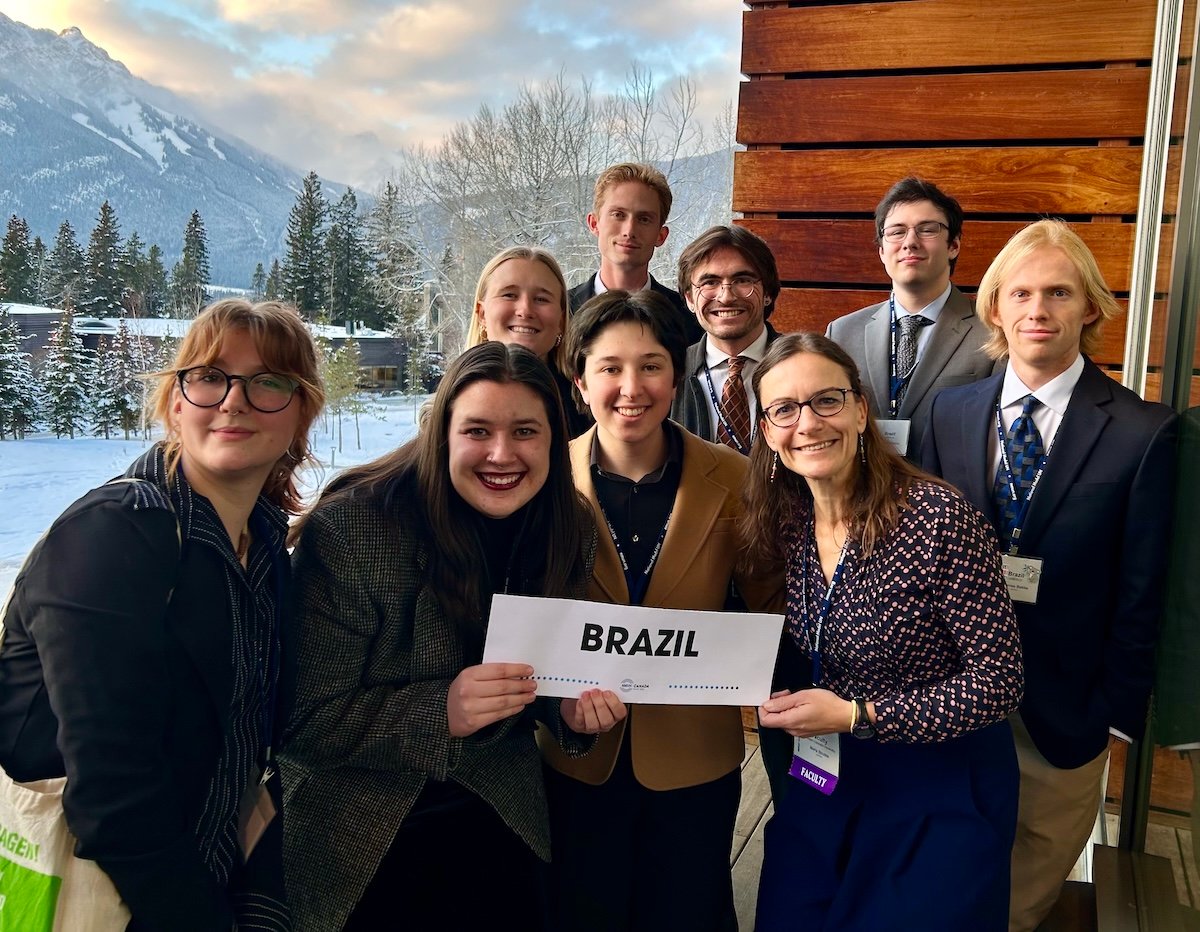
At a time when international alliances are strained, and the role of the United Nations is openly debated, a group of eight Western Colorado University students joined more than 300 students from around the world in Banff, Alberta, to see if diplomacy still works.
Model United Nations is a biannual conference that places students in the role of diplomats, requiring them to research, negotiate, and draft policy resolutions that mimic real UN proceedings.
Over five days, at the Model UN conference in Banff, Alberta, from November 23 to 29, Western’s delegation joined delegates from Japan, Italy, Britain, Australia, Canada, and other students from the U.S., along with a group of three faculty and more than a dozen students from Ukraine, to discuss how indigenous rights were being honored around the world.
But before the real work began, they got to take in their surroundings and learn to see the land through an Indigenous lens, setting the stage for a much larger conversation later in the week.
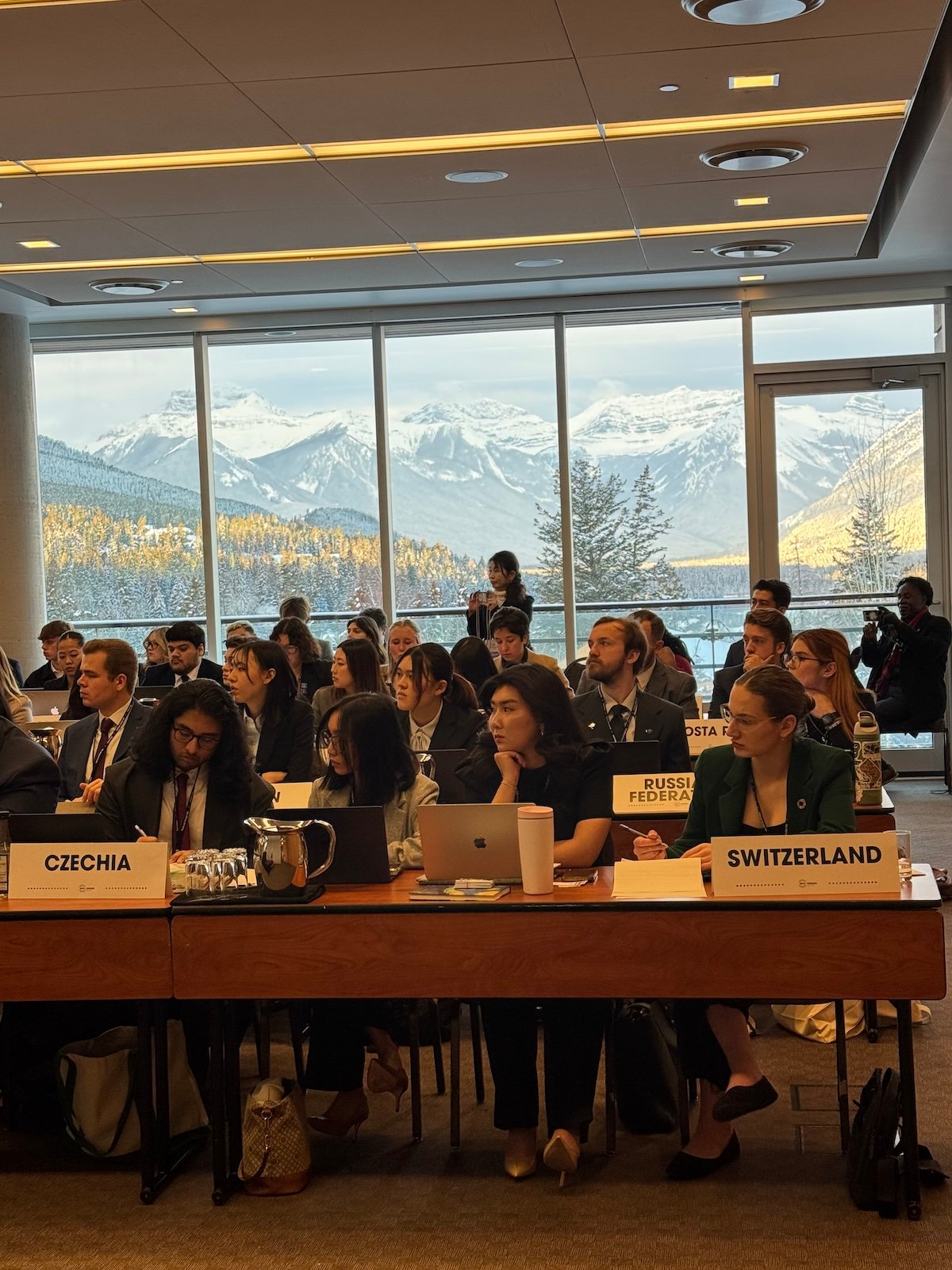
The conference was held at the Banff Centre for Arts and Creativity, a world-class venue that also hosts the renowned Banff Film Festival every year. It’s an entire campus of meeting and conference spaces, libraries, a hotel, and dormitories, all located within Banff National Park, a UNESCO World Heritage Site.
During the first two days of the conference, students took in the sights, hiked to a waterfall, and rode a gondola to the top of Sulphur Mountain. On their second day in Banff, students participated in three activities to familiarize themselves with the history, exploitation, and claims of the native people in that part of Canada.
While Maria Struble first started taking students to the Model UN’s flagship conference in New York City, which is a serious and at times cutthroat affair, she’s come to prefer the conferences held internationally because of their cultural component. Prior to going to Banff, Struble took students to a Model UN conference in Germany.
“The cultural experience is one of the main reasons we now only go to those,” Struble said. “I think it’s more valuable to their human development. After going to Germany, I realized all the learning that they were doing that wasn’t related to writing a resolution.”
After the first two days of acclimation and cultural outings in Banff, Western’s delegates stepped into the roles representing the Federative Republic of Brazil that they’d spent the fall semester preparing for.
Under the guidance of head delegate Emory “Hops” Hopkins, who was the only Model UN veteran, Western students served on four committees, approaching Indigenous rights from multiple angles.
In the United Nations Human Rights Council, junior Arizona Lee and senior Elijah Jordan argued for stronger Indigenous self-determination and political representation, along with protections for traditional economies.
At the United Nations Educational, Scientific and Cultural Organization (UNESCO), junior Townes Bakke and senior Trevor Johnson focused on preserving Indigenous languages and on how traditional knowledge can inform climate adaptation.
In the UN Development Programme (UNDP) committee, senior Finnegan Bunnell addressed the affordability of goods and the adaptability of marginalized communities in the face of climate change.
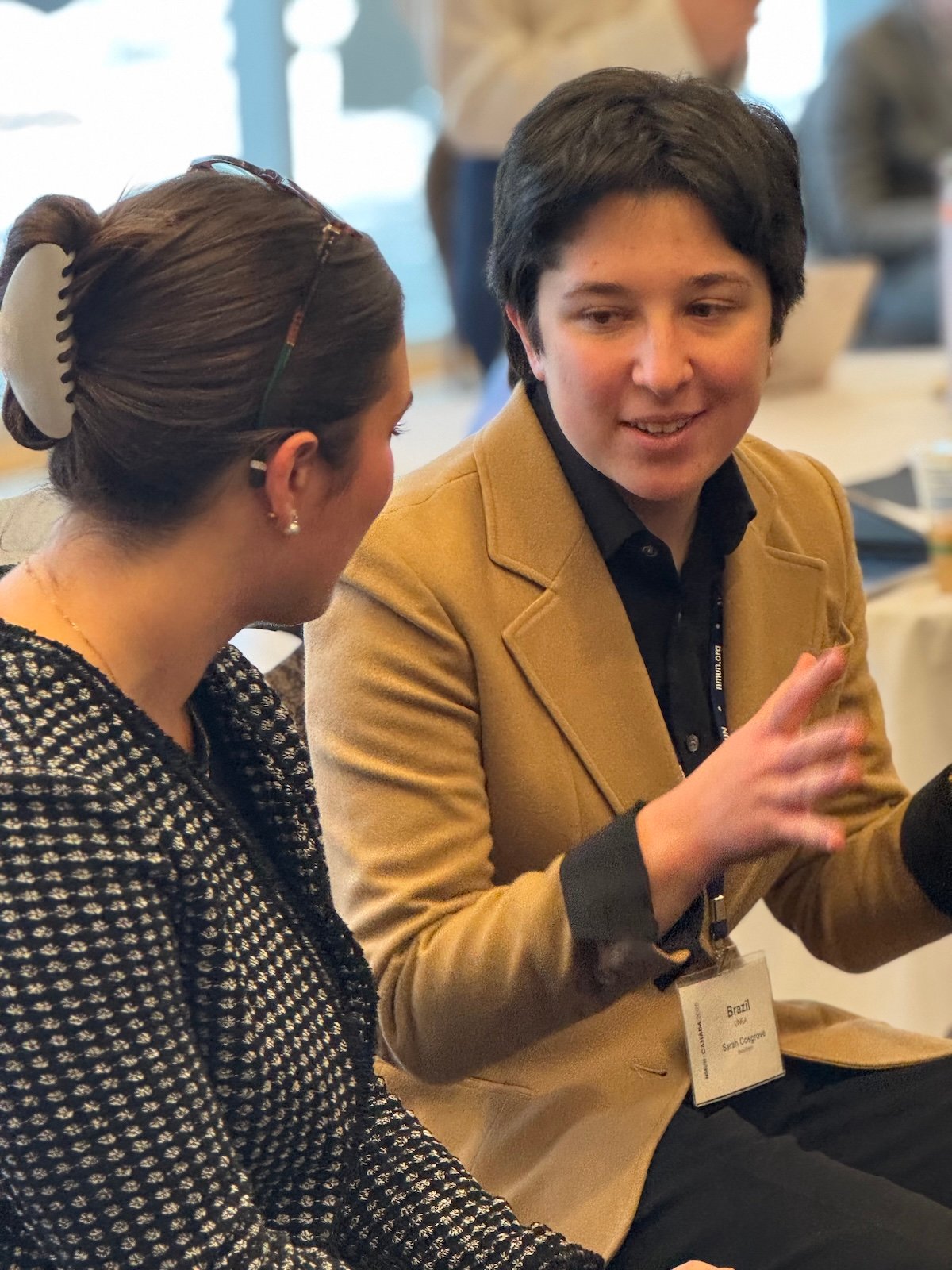
Senior Ainsley Rosenow, a Business Administration and Environment & Sustainability major in Western’s Honors Program, served with junior Sarah Cosgrove on the United Nations Environment Assembly, promoting sustainable use of the world’s oceans and reaffirming the legal rights of natural protected areas.
“This was my first Model UN conference,” Rosenow said. “Model UN gave me a much deeper appreciation for the power—and the challenge—of diplomacy.”
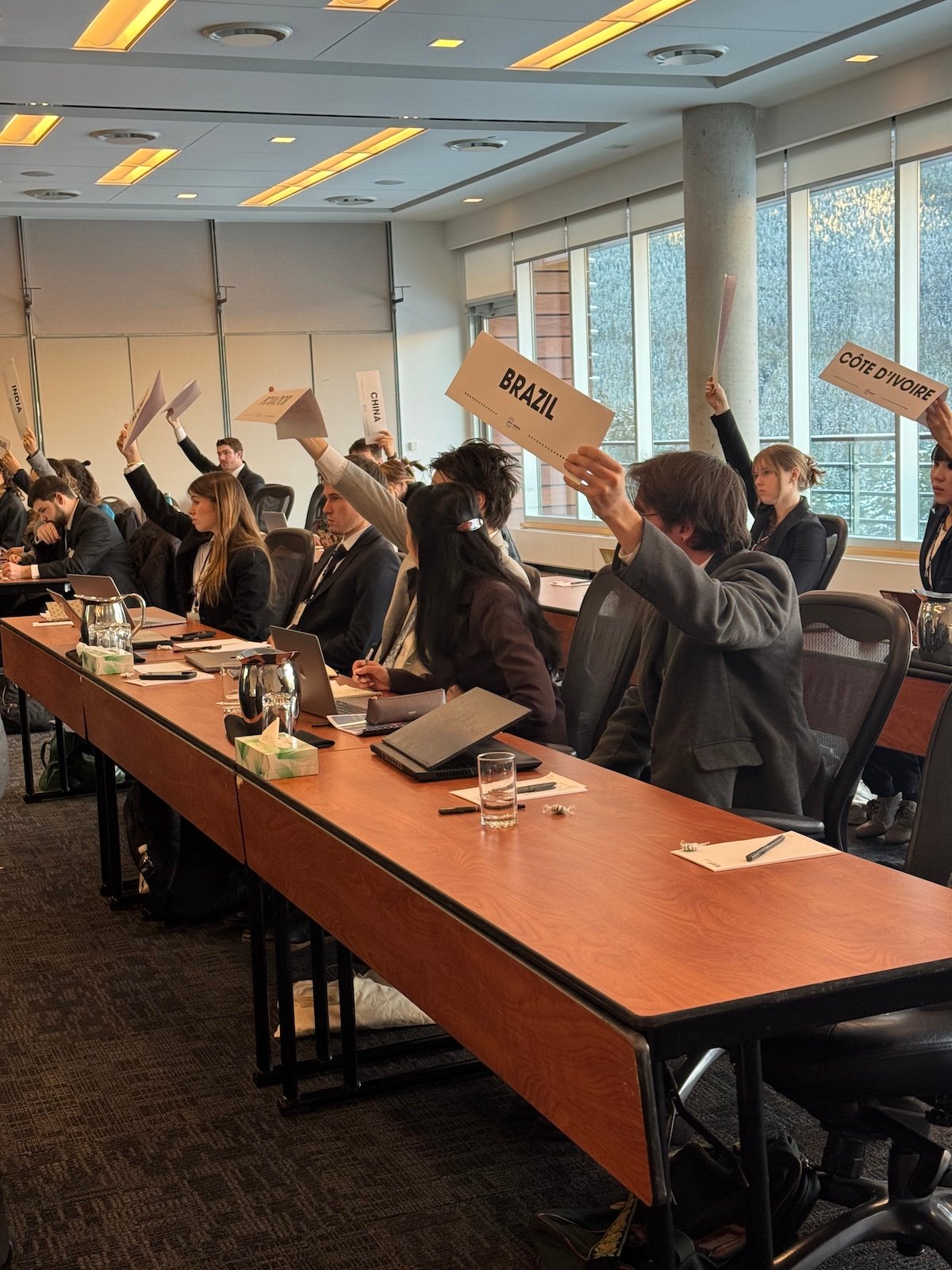
Rosenow said she appreciated how closely the conference mirrored the real UN, particularly the difficulty of navigating competing national interests shaped by different histories, values, and political priorities.
“It helped me understand just how complex global problem-solving is and how much patience and collaboration it requires,” she said. “It also showed me that even the world’s biggest problems become more manageable when you break them down and work collaboratively toward shared goals.”
Then, near the end of the conference, members of the German delegation approached Rosenow to tell her that their interactions with the Western delegates had genuinely and positively changed their perception of Americans. For Rosenow, it was a powerful reminder that real diplomacy often begins at the smallest scale: between people.
Ready to take your seat at the table?
Step into global diplomacy and tackle real-world challenges through Model United Nations at Western. Build confidence, sharpen your voice, and represent Western Colorado University on the world stage.