MyWestern
 Academic Calendar
 Bookstore
 University Catalog
 Athletic & Recreational Venues
 MyWestern
 Academic Help
 Library
 Health & Wellness
 Campus Map
 Events

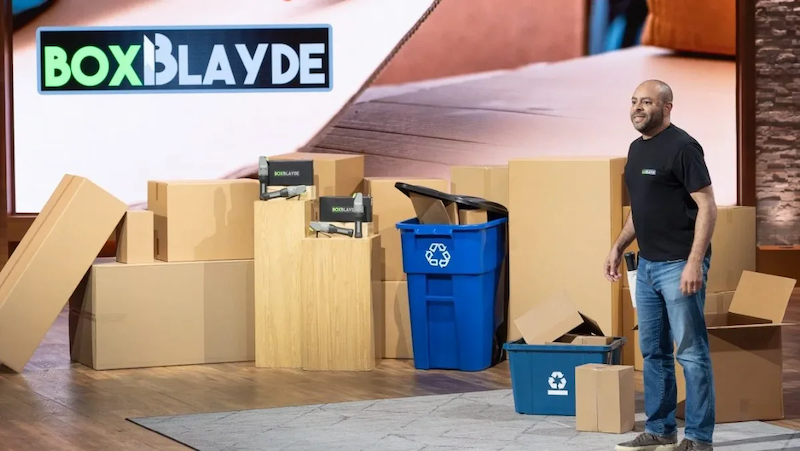
For an entrepreneur like Rob Wright (’00), inspiration for the next big idea can come from anywhere, even from a pile of cardboard boxes. And as the pile of boxes in his garage grew with every online order, Wright’s disdain for cutting them up grew with it. “I was out there every Sunday night cutting up boxes with a manual box cutter, and I dreaded the task,” he said.
There was no escaping it. If his cardboard didn’t fit in the bin with the other recycling, it would be left behind. He looked for powered alternatives online and found several. But they were all basically the same, with a shoddy design and expensive replacement blades. Each of them lasted a few months before breaking and being thrown in the recycling bin.
It was a frustration that came out in conversation with a friend one day. And when Wright discovered his friend was feeling the same frustration, they hatched an idea to build a better box cutter. His friend invested in the idea, and they went to work on a prototype.
Once they had what they believed was the best electric box-cutting tool on the market, they raised $90,000 on Kickstarter to fund the first round of production. They called their invention BoxBlayde, and it became the first physical product Wright ever brought to market. But it was far from his first product.

After Wright graduated from Western in 2000 with a degree in business and a minor in music, he moved west to Los Angeles, where the dot-com bubble was about to burst. Still, there were opportunities to be had. In the years that followed, Wright built and sold several technology companies, and even took one public in 2010.
His forte was online marketing, and when he launched BoxBlayde in 2020, that became the experience that set his startup apart. Almost as soon as it hit the market, his invention was selling and quickly became a viable business. Walmart and Wayfair started stocking BoxBlayde in their warehouses and new orders were coming all the time. “It turned out people were buying the product, and they liked it,” Wright said.
Friends and family were convinced that it was the perfect product for ABC’s Shark Tank, where entrepreneurs pitch their ideas to big-money investors who can leverage their fame to turn big profits for the companies they invest in. But while Wright thought it might be a good idea, his company was already making money, and he wasn’t really interested in going on national television.
Then Shark Tank reached out to him and asked if he would come on the show.
“Of course, I share that with my co-founders and investors, and they were like, ‘It’s malpractice if we don’t do this, because it’s so much exposure and opportunity in one fell swoop,” he said. “Why would you not do this?”
It was an easy question to answer. Wright would do it. But first, he would have to jump through a series of hoops, starting with an application, then extensive due diligence, and finally a recorded pitch, similar to the one he would give to the Sharks. “It was not easy,” he said. “It was just this constant back and forth until finally they said, You’ve been selected to be on the show.”
Being on the show was a huge relief, since Wright had spent significant time and energy on the application process. But it didn’t guarantee his pitch would ever be seen by an audience. According to BuzzFeed, only about half of the pitches the Sharks hear ever make it to television. And if any part of the non-disclosure agreement is violated, the producers will cut the pitch from the show entirely.
While he said the experience of being on set and filming the episode was great, getting cut from the show was a real concern for Wright, not because of an NDA violation, but because his response to the Sharks’ offers was different from that of a typical guest.
After negotiating with the Sharks on set, it was clear they were too far apart on financials to make a deal. “I’ve been around the block a little bit, and we didn’t go into the show in a desperate form,” Wright said. “The money and partnership would have been nice, and the exposure of having a Shark on board would have been great. But if we didn’t get a deal from the sharks, the business wasn’t just going to die either.”
Going on Shark Tank was never about betting the company on a single TV appearance. Ultimately, the goal remains to get a BoxBlayde into the hands of as many people as possible. Now Wright is hoping all his effort will translate into sales.
Want to be a part of the story?
In the School of Business, you won’t just learn about the future—you’ll be prepared to lead it. Gain real-world skills, build a powerful network, and graduate ready to launch your career confidently.
Related Stories