MyWestern
 Academic Calendar
 Bookstore
 University Catalog
 Athletic & Recreational Venues
 MyWestern
 Academic Help
 Library
 Health & Wellness
 Campus Map
 Events

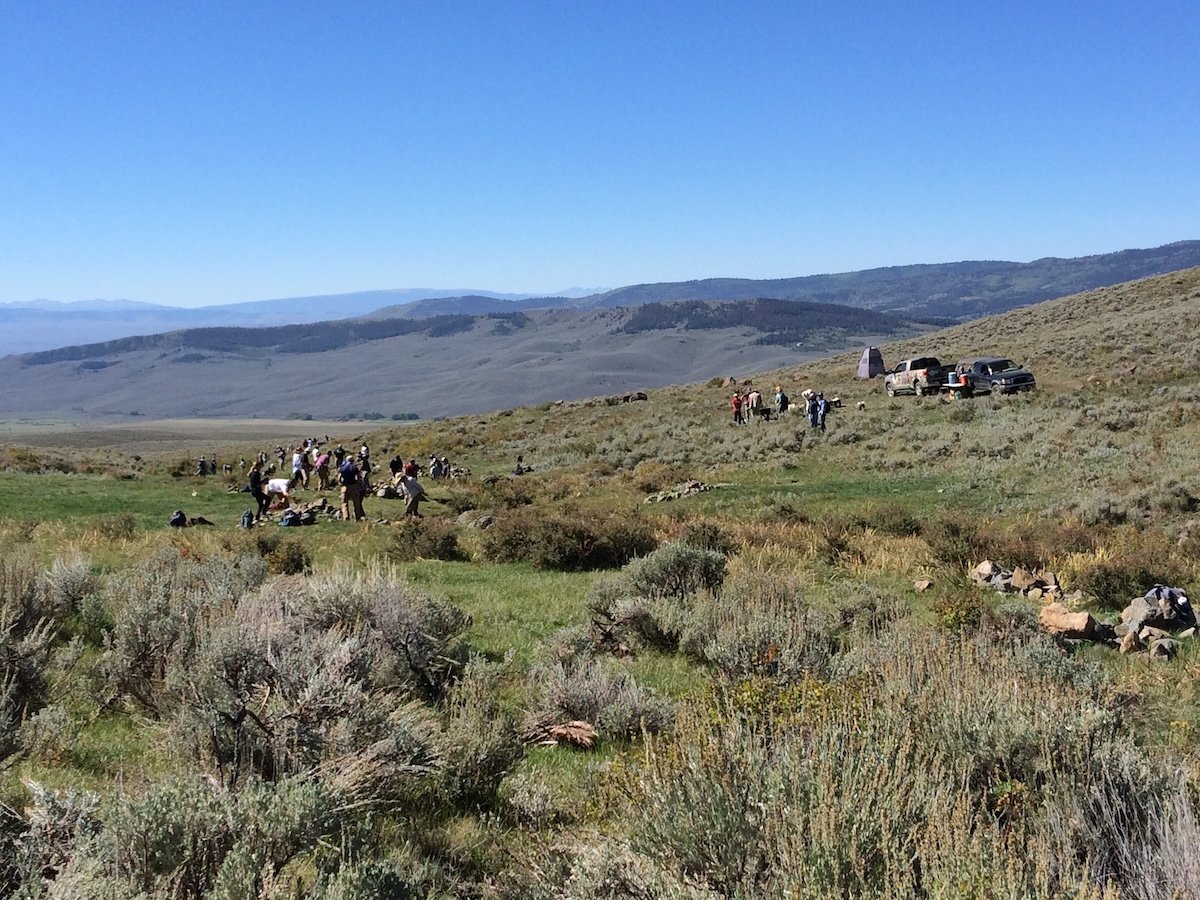
Small gullies in the dry ground were the first clues Matt Vasquez (’02) got that something wasn’t right.
He was a student at Western Colorado University in the early 2000s and worked seasonally with the U.S. Forest Service studying the Gunnison sage grouse’s winter habitat on Flat Top Mountain. “I started noticing all this erosion out there on the landscape and these gullies,” he said, “and was thinking that this looks really bad.”
In a place that averages just over 10 inches of precipitation all year, the landscape couldn’t afford to lose any water. And gullies meant that at some point in the year, water was flowing over the ground on its way to somewhere else. The consequences could be far-reaching.
When European settlers first arrived in the area near the end of the 19th century, Vasquez said the sagebrush steppe was likely dotted with countless green depressions and drainages that held water long after the surrounding hills had gone dry. These ‘wet meadows’ supported grasses and forbs that couldn’t survive in other places, and in turn supported an entire food web.
But the meadows were also the easiest places to navigate a wagon loaded with people and goods or graze hungry livestock. Future generations would find that they were natural places to build trails and roads.
“Once you get a nick in the soil, water will run into it, and that forms into a cut. Then the water is just moving through that system so much faster, and it’s cutting down into the ground, which results in lower water tables,” Vasquez said. “And where you might have once had a wet meadow, now it’s dry.”
Dry meadows allowed sagebrush to move in, and the open areas where endangered Gunnison sage grouse mated in the spring or used by Gunnison sage grouse chicks as brood-rearing habitat got smaller or disappeared altogether. It was one factor among many that contributed to a decline in sage grouse numbers.
But the problem wasn’t water so much as it was speed. And as he worked his way from Western student to seasonal U.S. Forest Service employee to a full-time position, Vasquez focused on stopping the erosion. But to do that, he needed to slow the water and let it soak into the soil, where it could nourish the roots of the grasses and forbs that would slow the flow of water even further. It was only a matter of starting the process.
Around the same time, a Wildlife Biologist with Colorado Parks and Wildlife, Nate Seward, was coming to the same conclusions and had reached out to a pioneer in the field of wet meadow restoration to learn what he knew.
Bill Zeedyk was a retired U.S. Forest Service wildlife biologist from New Mexico who knew the value of wet meadows and had developed a way to create low rock barriers, often no more than a foot high, that could block the gullies and temporarily stanch the flow of water, allowing the dormant wetland plants in the soil to come back to life. It was an ingenious low-tech solution to one of the most pressing wildlife needs in the basin.
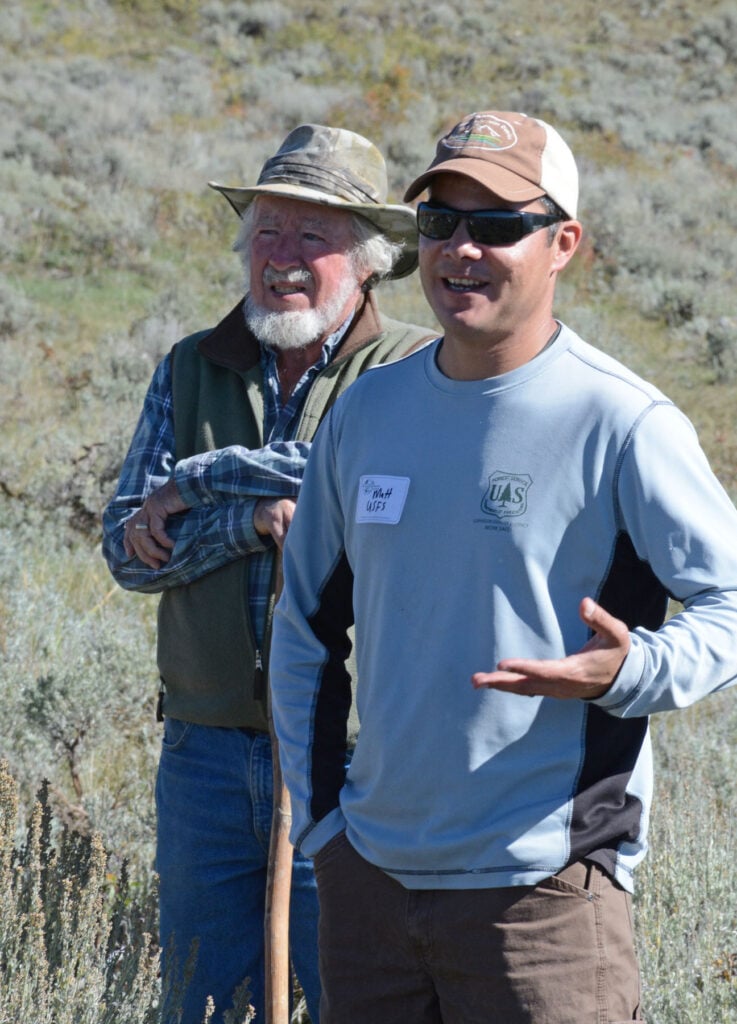
Vasquez started restoring wet meadows in the basin in 2013 as the District Wildlife Manager for Gunnison National Forest, implementing what he had learned, with help from biologists at other agencies and volunteers from nonprofit groups like The Nature Conservancy, Western Colorado Conservation Corps, High Country Conservation Advocates, Wildlands Conservation Volunteers, and the Upper Gunnison River Water Conservancy District.
The nonprofit trail advocacy organization, Gunnison Trails, and the local recreation community also came to embrace the idea of seasonal trail closures in areas throughout the basin to protect the wildlife supported by the wet meadows and surrounding habitat.
“It takes time for the public to understand the new rules that guide use,” Gunnison Trails Executive Director Tim Kugler said. “We have great compliance … and from my perspective, the recreation community understands, respects, and fully supports trail and area closures to help protect our area wildlife.”
Without that support, the wet meadows would provide the foundation of an ecosystem struggling to flourish.
“I think the work by groups like Gunnison Trails is really instrumental in helping to educate and communicate why we have seasonal trail closures,” Vasquez said, “and why we face some of those limitations on our public land use in order to help wildlife thrive.”
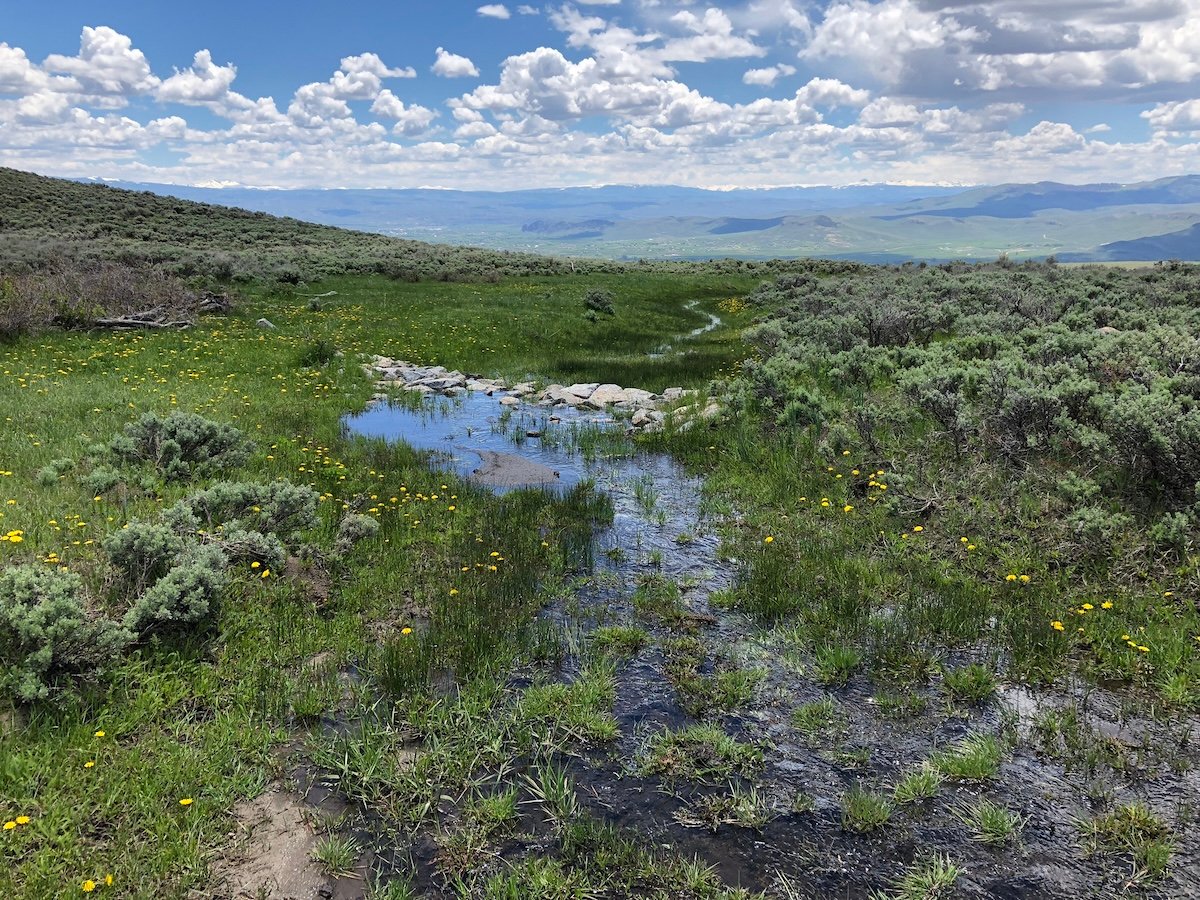
Of all the projects he’s seen completed, Vasquez, who is now the Wildlife Program Manager for the entire Grand Mesa, Uncompahgre, and Gunnison National Forest, considers his work on Flat Top Mountain as one of his most successful. There, the wet meadow restoration work has been extremely successful in an important part of the landscape. Sage grouse in the area are benefiting. But it’s the collaboration between federal and state agencies, non-profit partners, and private property owners that made Flat Top a shining example of what’s possible.
But the clearest evidence that the work was doing what it was meant to do came during the driest years.
“We’ve had several big droughts during the time we’ve been doing this restoration work, and we’ve been able to observe how these places respond during a drought,” he said. “Out in the sagebrush country, everything is just brown and yellow and dry. And where we had done this restoration work, those were some of the only green patches out there that you could see.”
Results like that have helped spread the word about wet meadow restoration, with the Gunnison Basin becoming something of a proving ground. By demonstrating that wet meadow restoration can work and be done collaboratively at relatively low cost, the ideas implemented here have begun to travel across the sagebrush steppe.
“There is good work happening in places that don’t have a university like Western,” Vasquez said. “And I think it’s in part because of the ability to share the successes that we’re having here.”
Even so, Vasquez is careful not to frame the story as one that’s come to an end. Without continued attention, he believes the loss of wet meadows will continue, often without anyone but the wildlife noticing.
“In the absence of any action, that yes, I believe we’re seeing, and we continue to see a loss of these wetter sites, these wet meadows, and lessening of riparian areas, things like that. And those riparian areas, wet meadows, spring sources, seeps, all those things out in the landscape, they make up such a small percentage of the overall landscape. And yet they’re so important for wildlife and people, too.”
After more than 20 years working across these landscapes, Vasquez knows the restoration work ahead will likely outlast him.
“Investing in people, the partnerships, and the restoration work drives our ability to continue,” he said. “Funding and workforce capacity in the land management agencies is something we continuously grapple with over time, which emphasizes the importance of the partnerships – without the partnerships, this work would not be nearly as effective nor as successful as it has been.”
Want to be a part of the story?
Be part of a community that’s passionate about protecting the natural world and shaping its future. In Western’s Wildlife & Conservation Biology program, you’ll work alongside faculty and peers in the field and the lab to study ecosystems, conserve species, and turn your curiosity into meaningful impact.
Related Stories