Skip to Main Content
Sustainability

Sustainable Campus Operations

Waste Diversion

Recycling is a key part of our commitment to cutting Western’s carbon footprint by 50% by 2035. With clearly marked recycling stations across campus, e-waste recycling partnerships, an on-campus industrial composter, and our FreeCycle program for reusing household items, we’re making waste diversion more accessible for everyone.

We also host regular zero-waste events, promote sustainable practices in campus housing, and encourage students, faculty, and staff to reduce single-use plastics through education and incentives. From compost bins in dining areas to move-out donation drives, we’re building a culture of sustainability that extends beyond the classroom.

There’s still work to do, but every action—big or small—brings us closer to our goal of a cleaner, greener Western.

Recycling Programs

General Recycling

Cardboard Collection Bins

E-Waste

Metal

Clothing

Plastic Wrap/Bubble Wrap/Plastic Bags

Transportation

More than half of Western students commute to campus sustainably—by biking, walking, taking the public bus, or carpooling. Western takes pride in being a bike-friendly campus. Bike racks are available at every building, and some buildings also offer longboard and skateboard racks. Covered bicycle parking is provided wherever possible, and students can use a free bike rental system at the Leslie J. Savage Library.

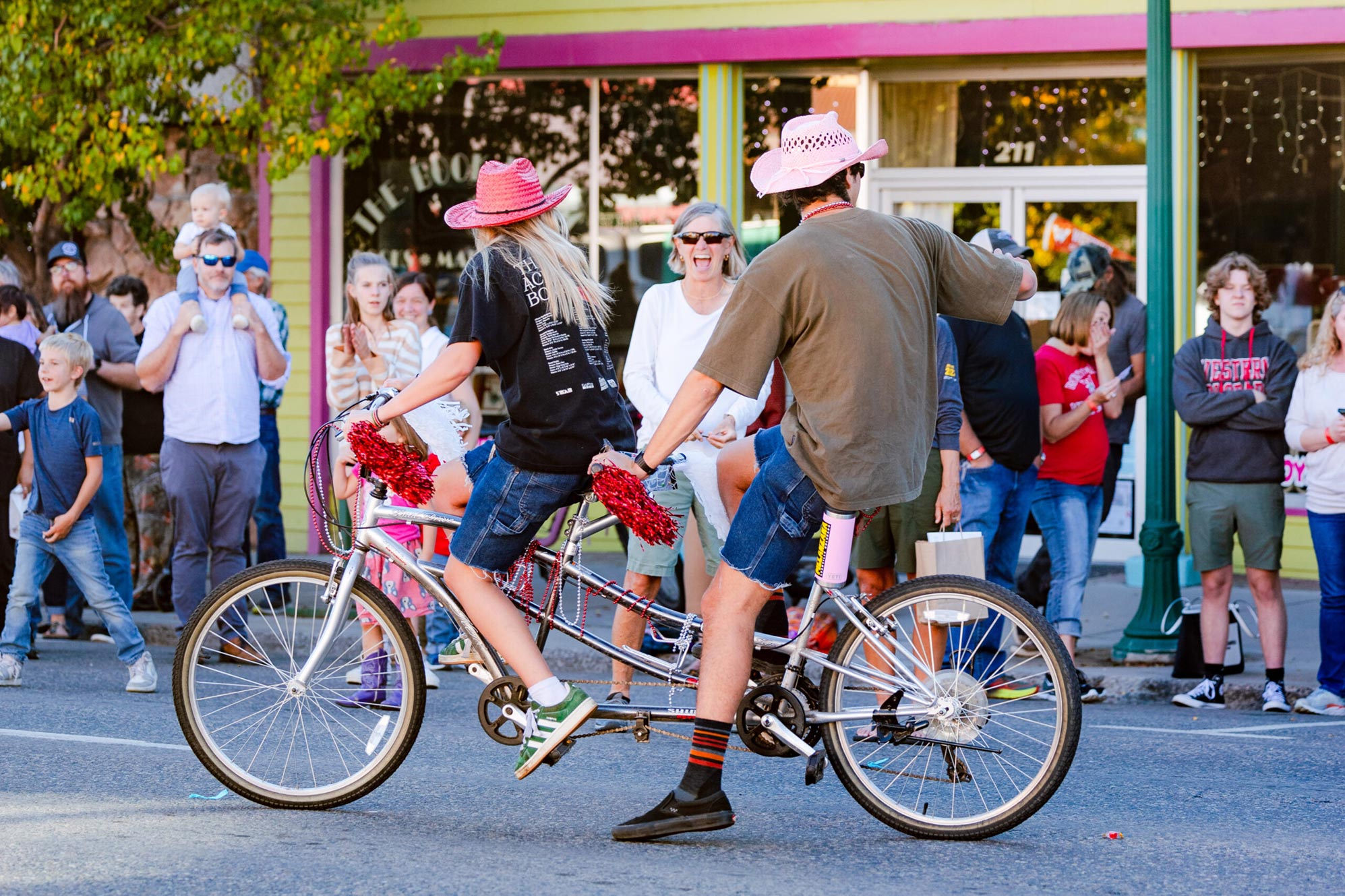
Two students wearing pink cowboy hats ride a tandem townie bike down main street and bring joy to community members during the Homecoming parade.

Western also supports electric vehicle use, with a charging station to the north of the Paul M. Rady School of Computer Science and Engineering. Additionally, Western partners with the local RTA bus system. A campus bus stop is conveniently located at Colorado Street and Ohio Avenue, providing access to destinations around Gunnison and up to Crested Butte. The bus runs multiple times daily, with schedules that vary by season. You can even bring your skis, snowboard, or bike along for the ride!

Food & Dining

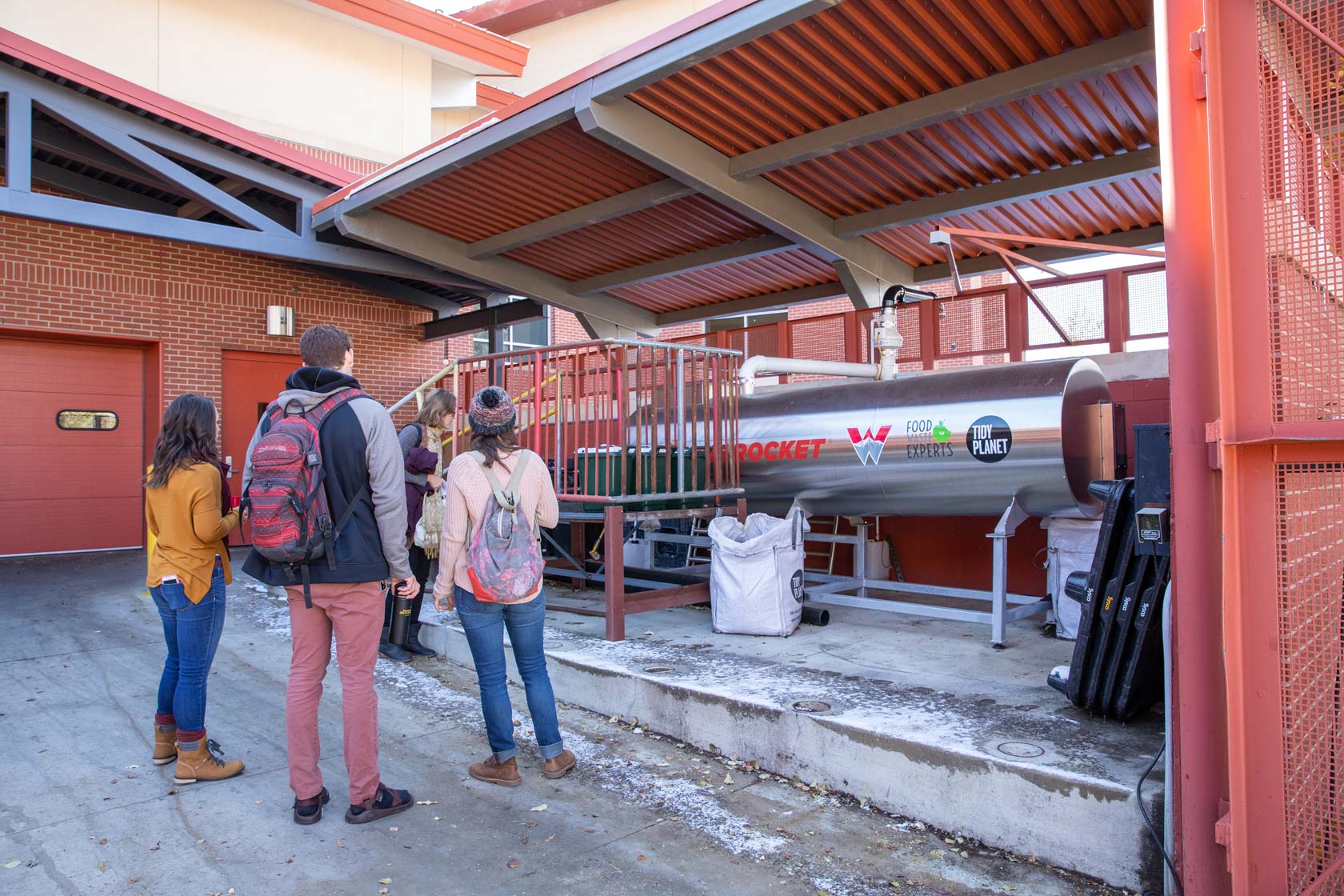
The Rocket Composter diverts up to 95% of the building’s food waste, making the University Center a leader in campus sustainability. Funded by the Colorado Department of Public Health & Environment, this system has the ability to divert 20 tons worth of food waste from going into the landfill. To further the success of this program, the rocket composter is receiving further support through the construction of a full enclosure around to machine to ensure year-round operation independent of the cold. The food waste diversion program is further supported through waste oil recycling for county biodiesel production.

In the Mountaineer Marketplace, after produce has gone undistributed and is no longer safe for human consumption, they partner with the Gunnison Country Food Pantry to coordinate food waste efforts. Both the Gunnison Country Food Pantry and Mountaineer Marketplace give this produce to local ranchers who is able to use this food waste for their livestock.

Rocket Composter at Western Colorado University.

Purchasing Policies

Established in 2011, Western’s Environmentally Preferable Purchasing Policy (EPP) fortifies the University’s commitment to sustainability. The goal of this policy is to reduce the unfavorable environmental and social impacts of our purchasing decisions by buying goods and services from manufacturers and vendors who share our commitment to the environment. Environmentally preferable purchasing is the method whereby environmental and social considerations are given equal weight to the price, availability, and performance criteria that colleges and universities use to make purchasing decisions. Western strives to purchase products that embody the following principles:

  • High content from post-consumer recycled materials
  • Low embodied energy (consumed to extract, manufacture, distribute and dispose)
  • Recyclable, compostable and biodegradable
  • Non-toxic
  • Energy efficient
  • Durable and/or repairable
  • Produced in a manner that demonstrates environmental, social, and ethical values
  • Minimal packaging (packaging should also abide by the above principles)
  • Afterlife reuse/regeneration potential through the company (carpeting, furniture, etc.)

Monitoring Our Progress

Western’s Campus Operations uses two major reporting platforms—Second Nature and the Sustainability Tracking, Assessment & Rating System (STARS)—to measure and communicate its sustainability progress. These tools help evaluate how new projects can improve energy efficiency on campus and demonstrate the broader benefits of sustainable development.

Second Nature’s mission is to accelerate the transition to a sustainable future by supporting higher education leaders in making sustainability, equity, and resilience central to learning and operations. Since developing its Climate Action Plan in 2009, Western has been a signatory of Second Nature’s Climate Leadership Network. The university uses the Second Nature Reporting Platform to track progress toward its goal of reducing greenhouse gas emissions by 50% by 2050. Annual progress updates and greenhouse gas reports are submitted through the platform and are publicly available.

Western also reports its sustainability efforts through the Association for the Advancement of Sustainability in Higher Education (AASHE) using its STARS framework. STARS is a transparent, self-reporting tool that allows colleges and universities to assess their sustainability performance. It evaluates institutions across four broad categories: Academics, Engagement, Operations, and Planning & Administration. Western completed its first STARS report in 2016, earning a Bronze rating, and improved to a Silver rating in 2019.

LEED Buildings

Western Colorado University is committed to sustainable building practices that reduce environmental impact and enhance indoor comfort. Recent construction and renovation projects are designed to meet or exceed LEED (Leadership in Energy and Environmental Design) standards—an internationally recognized benchmark for green building. Features include abundant natural light, energy-efficient climate control systems, and CO₂ sensors that improve indoor air quality.

Western’s Campus Operations continues to prioritize energy conservation across campus. Upgrades, such as switching to LED lighting and improving building systems, help reduce greenhouse gas emissions and lower overall energy consumption. All future building projects are expected to achieve LEED Gold certification or a comparable standard.

WCU University Center

University Center

Borick Business Building

Kelley Hall

Taylor Hall

Mountaineer Field House

Pinnacles Apartments

Paul M. Rady Building of Computer Science & Engineering