Skip to Main Content
Graduate

Master of Environmental Management (MEM)

WCU Program - Master of Environmental Management

Turn environmental challenges into real-world solutions.

Western Colorado University’s Master of Environmental Management (MEM) is an applied graduate degree focused on sustainability, conservation, natural resource management and environmental leadership.

Through interdisciplinary coursework, hands-on projects and partnerships with environmental organizations, students develop practical skills in environmental planning, policy and management while building a professional portfolio aligned with their career goals.

With residential and distance learning options, students can pursue their environmental management master’s degree in Gunnison, Colorado, or from their own communities.

What Is a Master of Environmental Management?

A Master of Environmental Management (MEM) is a graduate degree that combines environmental science, policy, sustainability and natural resource management to prepare students to address environmental challenges.

Environmental management professionals develop and implement strategies that protect natural resources, support healthy ecosystems and help communities adapt to environmental change. Their work often involves collaboration among government agencies, nonprofit organizations, businesses and community stakeholders.

Western’s MEM program emphasizes applied learning rather than traditional research alone. Students develop practical skills in environmental planning, project management, policy analysis and stakeholder engagement while working toward solutions to real environmental problems.

Why Study Environmental Management at Western?

Western’s Master of Environmental Management combines interdisciplinary education, professional mentorship and hands-on experience to prepare students for environmental leadership.

Rather than focusing exclusively on classroom learning, students apply course concepts through projects developed with community and organizational partners. Each student builds an individualized master’s project and professional portfolio aligned with their interests and career goals.

Faculty mentorship, career counseling and opportunities to collaborate with environmental professionals help students develop professional connections and explore career pathways.

Located in the Rocky Mountains, Western provides opportunities to engage with environmental challenges involving public lands, natural resources, conservation and community sustainability. Distance students bring additional perspectives by applying their education to environmental issues in their own communities.


A student sweeps using a bug net in a wet meadow restoration area.

Areas of Study

Choose a Graduate Certificate Alongside Your MEM

Western's graduate environmental management certificates allow students to develop specialized expertise while pursuing their Master of Environmental Management. Each certificate may be completed as a stand-alone credential or incorporated into the MEM degree. These programs combine interdisciplinary coursework with applied learning to address environmental challenges.

Integrative Land Management
A female student uses a device to test a biological sample from a pond.

Integrative Lands Management

Explore the intersection of conservation, agriculture, recreation and development. Develop skills in land-use planning, natural resource policy and collaborative landscape management.

Integrative Land Management
Community Resilience
Two MEM students prune plants in the Chipeta Garden.

Community Resilience

Learn how communities respond and adapt to environmental, social and economic change through climate adaptation, collaborative governance and resilience planning.

Community Resilience
Ecosystem Restoration
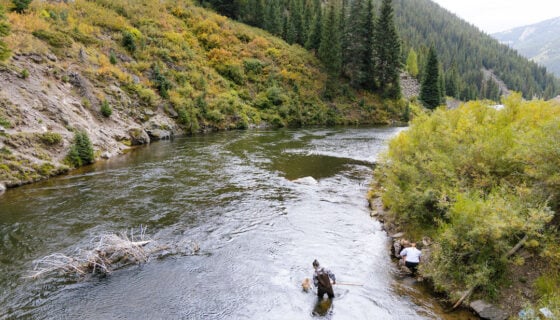
A wide landscape shot of a student collecting insect samples on the Taylor River.

Ecosystem Restoration

Develop practical skills in ecological monitoring, water resource assessment, habitat restoration and adaptive management.

Ecosystem Restoration
Forests, Fires & Fuels
Content Card Image

Forests, Fires & Fuels

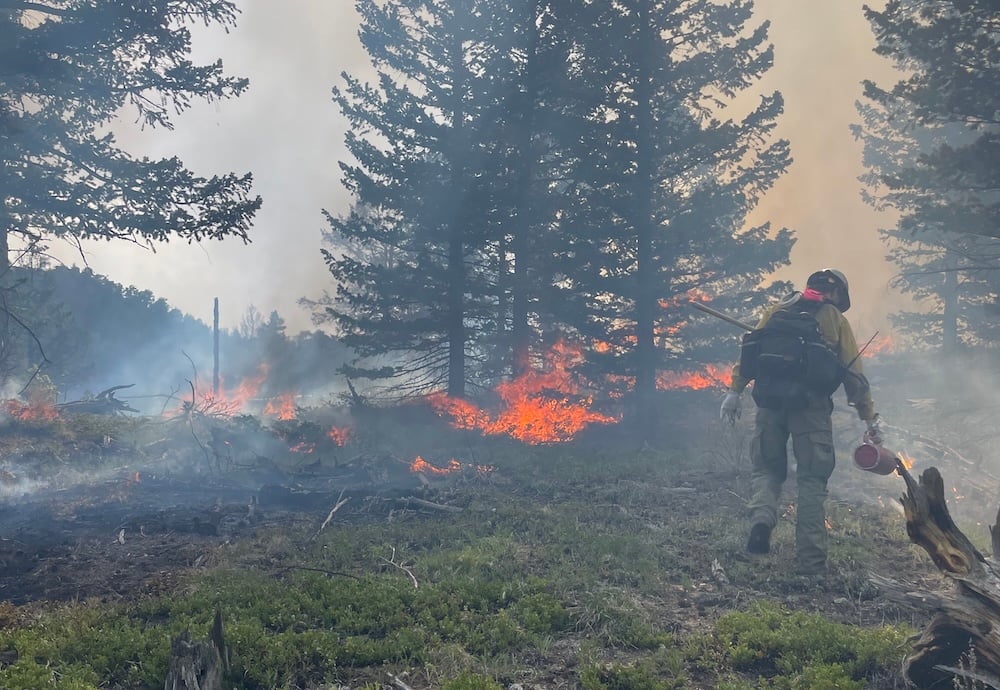
Study wildfire risk, fire ecology, fuels management and forest restoration while exploring strategies that support resilient landscapes and communities.

Forests, Fires & Fuels
Mine Reclamation Management
A field of wildflowers with mountains in the background during sunrise.

Mine Reclamation Management

Explore the restoration and long-term management of lands affected by mining, including soil reconstruction, water management, revegetation and regulatory compliance.

Mine Reclamation Management

Master of Environmental Management at a Glance

Degree: Master of Environmental Management (MEM)
Credits: 36
Time to Complete: Two years
Format: Residential or distance learning
Location: Gunnison, Colorado, or distance-based study
Program Focus: Environmental management, sustainability, natural resources, policy and applied problem-solving
Culminating Experience: Applied master’s project and professional portfolio
Specialization Options: Five stackable graduate certificates
GRE: Not required
Entry Terms: Fall and spring

Western’s tight-knit community and value of stewardship set me up for success and the opportunity to share what I am passionate about.

Megan Yost

Master of Environmental Management (MEM)
Megan Yost

Residential and Distance Learning Options

Western’s Master of Environmental Management offers two flexible pathways, allowing students to pursue graduate education while staying connected to their professional interests and communities.

Residential MEM Program

Residential students study in Gunnison, Colorado, where they can engage directly with faculty, peers and environmental organizations throughout the Rocky Mountain region.

The residential experience provides opportunities for field-based learning, professional collaboration, workshops and applied projects addressing environmental challenges. Students can also participate in multi-day field experiences and cross-cultural expeditions.

Distance MEM Program

Western’s distance learning option allows students to pursue their environmental management master’s degree while remaining in their home communities.

Distance students participate in hybrid courses alongside residential students and develop applied master’s projects connected to organizations, communities or environmental issues relevant to their interests.

Students remain connected to the MEM community through virtual collaboration, faculty mentorship and opportunities to participate in professional events.

Hands-On Environmental Management Experience

Experiential learning is central to Western's Master of Environmental Management program. Students apply classroom knowledge through projects and partnerships with environmental organizations, agencies and communities. These experiences connect environmental science, policy and management with the practical work of addressing environmental challenges.

Applied Master's Projects and Professional Portfolios

Each MEM student develops a master’s project aligned with their professional interests and the needs of a community or organizational partner.

Projects may address environmental planning, sustainability, natural resource management, conservation or other environmental challenges.

Working with faculty mentors and project partners, students develop solutions, collaborate with stakeholders and communicate their findings. The resulting project and professional portfolio demonstrate their ability to apply environmental management skills in real-world settings.

Field Experiences and Professional Development

Western’s MEM program connects students with environmental professionals through conferences, workshops, immersive field experiences and cross-cultural expeditions.

Students can participate in the annual Headwaters Conference each fall and the Community Forum in early May, where graduating students present their master’s projects. These events provide opportunities to share ideas, build professional networks and connect with environmental organizations and community partners.

Distance students may apply for funding to support travel for these events, multi-day field trips and other professional training opportunities. Alongside ongoing faculty mentorship, these experiences help students develop practical skills and professional connections across environmental sectors.

What Can You Do With a Master of Environmental Management?

A Master of Environmental Management prepares graduates for careers in sustainability, conservation, natural resource management, environmental policy and organizational leadership.

Environmental management professionals work across government agencies, nonprofit organizations, consulting firms, businesses and community organizations to develop and implement solutions to environmental challenges.

More than 85% of Western MEM alumni are actively engaged in environmental management careers.

Potential career paths include:

  • Environmental Manager
  • Environmental Consultant
  • Sustainability Coordinator
  • Natural Resource Manager
  • Conservation Program Manager
  • Environmental Policy Analyst
  • Environmental Restoration Planner
  • Forestry Program Coordinator
  • Carbon Analyst
  • Environmental Program Director

Graduates may work with federal, state and local agencies, conservation organizations, land trusts, environmental consulting firms, research institutions and businesses.

Environmental Management Skills You'll Develop

Western’s MEM program combines environmental knowledge with practical skills in project management, leadership and interdisciplinary problem-solving.

Students develop expertise in:

  • Environmental Project Management
  • Sustainability Planning
  • Natural Resource Management
  • Environmental Policy and Analysis
  • Community Engagement and Education
  • Stakeholder Collaboration
  • Applied Research and Data Analysis
  • Environmental Communication
  • Leadership and Project Coordination

Master of Environmental Management FAQs

What is a Master of Environmental Management?

A Master of Environmental Management is a graduate degree focused on sustainability, conservation, environmental policy and natural resource management. Students develop practical skills to manage environmental projects, collaborate with stakeholders and address environmental challenges.

What can you do with a Master of Environmental Management?

Graduates can pursue careers in environmental consulting, sustainability, conservation, natural resource management, environmental policy and program leadership. Employment opportunities span government agencies, nonprofit organizations, businesses and environmental consulting firms.

Can you earn a Master of Environmental Management online?

Western offers a distance learning option for its Master of Environmental Management program. Students participate in hybrid courses alongside residential students while completing applied projects connected to their home communities. Opportunities for in-person conferences, field experiences and professional training are also available.

How long does Western's MEM program take?

Western’s Master of Environmental Management is a 36-credit graduate program designed to be completed in two years.

Do you need an environmental science degree to apply?

No. Western’s MEM program accepts applicants with a bachelor’s degree in any academic field. Applicants must meet prerequisite requirements, including coursework in statistics, natural or environmental sciences and social sciences.

Is the GRE required for the MEM program?

No. Western Colorado University does not require GRE scores for admission to its Master of Environmental Management program.

What is the difference between environmental management and environmental science?

Environmental science focuses on understanding environmental systems through scientific investigation and analysis. Environmental management applies scientific knowledge alongside policy, planning, collaboration and management practices to address environmental challenges.

Western’s MEM program emphasizes applied projects, professional collaboration and developing practical environmental solutions.

Can I specialize within the Master of Environmental Management?

Yes. Western offers five graduate certificates that can be incorporated into the MEM degree: Integrative Land Management, Community Resilience, Ecosystem Restoration, Forests, Fire & Fuels, and Mine Reclamation Management.

What is the difference between a Master of Environmental Management and a master's in ecology?

A Master of Environmental Management emphasizes applied environmental problem-solving, policy, planning, stakeholder collaboration and project management.

A master’s in ecology focuses more specifically on ecosystems, species interactions, ecological research and conservation science.

Western offers both graduate pathways, allowing students to choose a program aligned with their academic interests and professional goals.

Admissions, Cost, Requirements

Admissions
Tuition & Costs
Program Requirements

MEM Application Requirements

Application Requirements

  • Bachelor’s degree in any academic program.
  • GRE test scores are NOT required to apply.
  • Official academic transcripts showing a recommended 3.0 undergraduate GPA or above in relevant courses. To avoid delay please request an official copy from your previous college or university to be sent directly to Western’s Graduate Studies (graduatestudies@western.edu). You can also request them from Student Clearing House.
  • One-page Statement of Purpose describing your intellectual and professional interests in environmental management and potential idea for a master’s project, submitted within the online application.
  • Answer six short essay questions within the online application.
  • Upload a resume or one-page document that outlines your past environmental employment, leadership, and volunteer experience.
  • Two letters of recommendation from professors or supervisors in related fields.
  • If you plan on attending from a distance: As part of your application, you’ll be asked whether you plan to attend as a residential or low-residency student. If you select the low-residency option, please briefly describe how you will stay engaged in environmental management work or related activities while completing your degree from a distance. Share how your experiences will support your learning, professional growth, and contribute to the perspectives within your cohort. Be sure to include the timeframe during which you plan to pursue the low-residency path. Low-residency students are fully integrated into courses, projects, and learning activities alongside residential students.

Admittance into the MEM requires a BA or B.S. degree and the following prerequisites, which must be completed no later than the end of the first fall term:

  • College-level statistics course
  • Two, college-level, natural or environmental science courses (Biol, Geol, Envs, Phys, Chem, Sci)
  • Two, college-level, social science courses

*Please note that strong applicants missing prerequisites may be provisionally admitted with some prerequisites, such as statistics, being able to be completed for free online prior to beginning the program or by the end of the first fall term. Please also note the 3+2 pathways available to Western undergrads.

Application Deadlines

  • Applications are accepted year-round with a preferred deadline of February 15th. Students can enter the program at the beginning of the fall (late August) or spring term (the second full week of January).
  • Residential and distance options for the two-year degree available.
  • Find out more information on the MEM program prerequisites.

If you have any questions about the application process, please contact MEM.

MEM Tuition & Fees

Term Credits Tuition per Credit Fees per Credit* Flat Fees** Total Tuition & Fees
Year 1: Fall 9 $847.00 $73.40 $50.00 $8,333.60
Year 1: Spring 9 $847.00 $73.40 $8,283.60
Year 2: Fall 9 $847.00 $73.40 $8,283.60
Year 2: Spring 9 $847.00 $73.40 $8,283.60
Program Total 36 $33,184.40

*Mandatory graduate student fees per credit hour
$63.00 Graduate Studies Administrative Operations Fee
$6.50 Library Fee
$3.90 IT Services Fee

**Mandatory graduate student flat fees
One-Time Matriculation Fee: $50.00. Applies once to new students in their first semester.

Master of Environmental Management

A master’s degree is an advanced qualification earned after completing a bachelor’s degree. It focuses on a specific area of study and provides specialized knowledge and skills. To complete a master’s degree, students must fulfill core coursework, elective requirements, and often a final project, thesis, or practicum.

How to Apply to MEM

We are so excited about your interest in applying to MEM! Please take a moment to review the requirements and deadlines before accessing the application.

Financial Aid

Faculty & Staff

Mountain Graphic